

Recovery after a stroke rarely follows a straight line. Some things come back quickly. Others take much longer, and some days feel like they’ve gone backwards. What I’ve learned, working with clients at this stage of recovery, is that the body responds best to patience — to movement that’s slow enough to actually notice what’s happening, rather than rushed through.
This is where our approach to Pilates has something genuine to offer. It isn’t a treatment for stroke, and it doesn’t replace physiotherapy or clinical rehabilitation. But as a complement to that care, once a client has been cleared by their medical team, it can support the slow work of rebuilding balance, coordination, and confidence in movement.
Why slow, controlled movement matters after stroke
A stroke can affect balance, coordination, and control on one side of the body in ways that make even simple daily movements feel effortful and uncertain. Rebuilding that control isn’t about pushing hard. It’s about relearning movement with precision, using the body as a sensor to feel what’s happening and respond to it — which is close to the foundation of how we approach every client, stroke recovery or not.
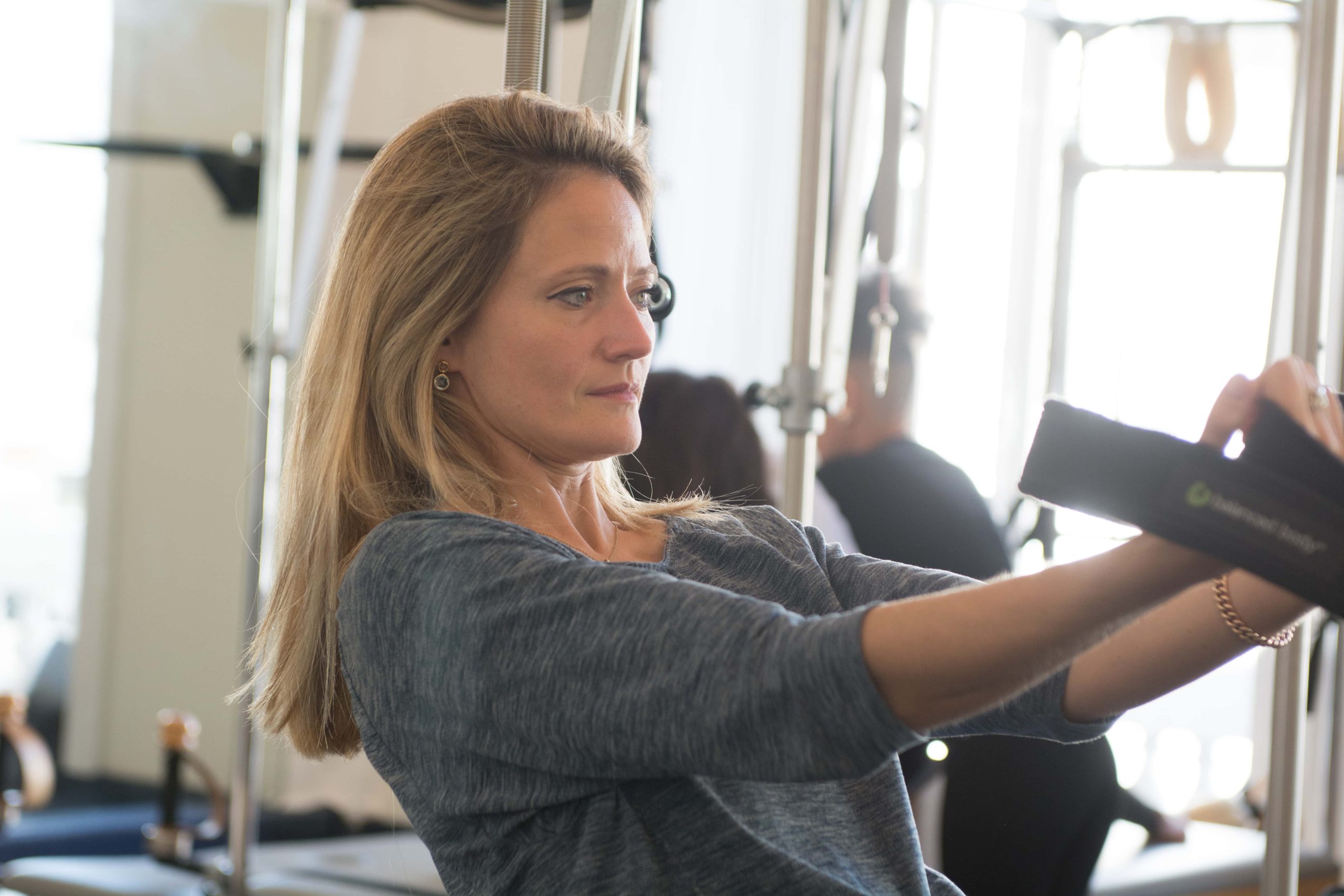
The apparatus we use supports the body through movement rather than leaving it to manage the full effort alone, which matters enormously when balance or one-sided strength is still recovering.
What we need before we begin
We always ask for clearance from a GP, neurologist, or physiotherapist before starting sessions with a stroke recovery client. Every stroke is different, and the right starting point depends entirely on where someone is in their recovery, what their care team has already established, and what movement is currently safe for them.
Once cleared, we assess individually — never from a template — looking at what movement is available, where control needs rebuilding, and how session pace should be set for that particular person.
What a session looks like
Sessions are slow, deliberate, and closely guided. There’s no music and no external pace to keep up with — attention stays on the client’s own movement and breath throughout. Work often starts with very controlled, supported movement and builds gradually as coordination and confidence return.
Because this is one-to-one, the session can change from week to week as recovery progresses — something a group class simply can’t offer.
This is a similar principle to how we work with clients managing Parkinson’s — another condition where control, coordination, and confidence in movement are central to the work, always alongside a client’s existing medical care.
Can Pilates help with balance after a stroke?
Balance and coordination are often central to what we work on with stroke recovery clients, always within the guidance already set by their medical team. The apparatus-based approach allows genuinely controlled, supported movement while that balance work happens.
Is this a substitute for physiotherapy?
No. This sits alongside physiotherapy and clinical rehabilitation, not in place of it — the same clinical, individually assessed approach we bring to any client managing a medical condition. We ask every stroke recovery client to be cleared by their medical team first, and we work in a way that complements — not replaces — that ongoing care.
How soon after a stroke can someone start?
This depends entirely on the individual’s recovery and their medical team’s guidance. There’s no fixed timeline we work to. We begin once a client has clearance, and build from wherever they are on that day.
Ready to begin?
If you or a family member are looking for a considered, individually assessed approach to movement during stroke recovery, get in touch to arrange a consultation.
