Can Pilates Build Muscle and Strength? A Complete Guide
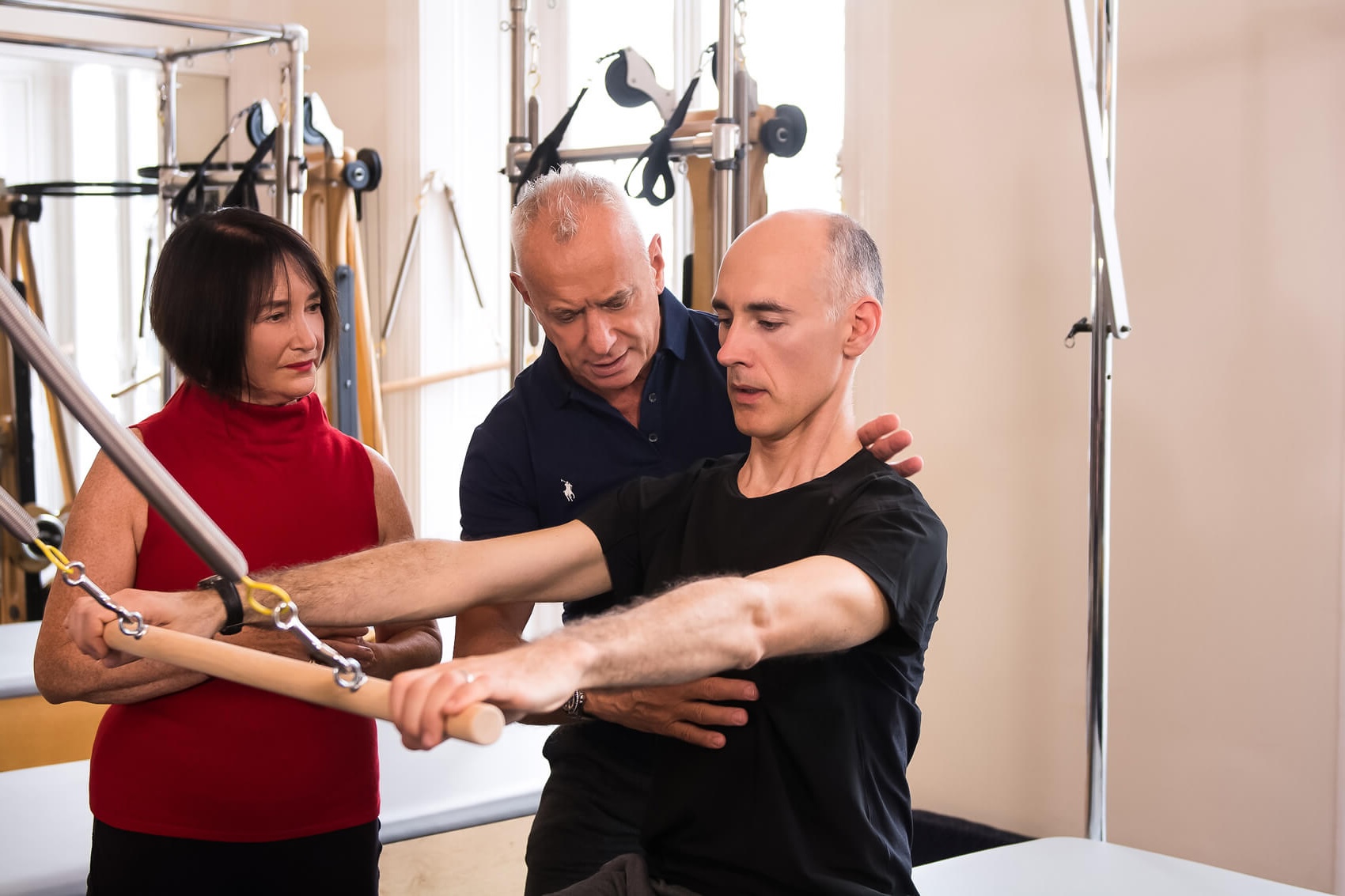


The common misconception is that Pilates tones but doesn’t build real strength. The truth: Pilates can build lean, functional muscle — when it’s taught with precision, resistance, and progression. It won’t give you bodybuilder bulk, but it develops strength you can use. Here’s how it works, what to expect, and how to make sure you’re getting it.
Yes. Pilates builds muscle through the same principles weight training uses, just applied differently:
Every Pilates rep is slow and controlled. Holding a teaser for 10 seconds or doing 8 slow leg presses on the reformer keeps the muscle under load the entire time. That prolonged tension signals your body to adapt and strengthen. It’s the same mechanism as a tempo squat in the gym.
Reformer springs provide adjustable resistance from 5kg to over 50kg. Unlike dumbbells, the load changes through the range of motion. The hardest part of the exercise is often where you’re weakest, which forces stabilisers and primary movers to work together.
This is what most casual classes miss. Muscle grows when you gradually increase challenge: heavier springs, longer levers, less base of support, or more complex coordination. Without progression, Pilates maintains strength. With it, you build it month after month.
Clarify: Pilates builds lean, functional strength and muscle endurance. You develop the kind of strength that improves posture, protects joints, and transfers to daily life. It does not build bulk like hypertrophy-focused weight training.
The mechanism differs from traditional weight training, which is why the results look and feel different.
Fast reps let you use momentum to cheat. Pilates removes it. Every inch is deliberate, so the muscle can’t escape the work. Five slow roll-ups done correctly are harder than 25 fast crunches with momentum.
In weights, core work is separate. In Pilates, your transverse abdominis, pelvic floor, and multifidus activate before your arms or legs move. You’re building a strong centre while training everything else. That’s why back pain often reduces after 6-8 weeks.
Especially on the reformer, you’re balancing on a moving carriage while pushing or pulling springs. Your nervous system coordinates large movers and small stabilisers together. This builds integrated, functional strength vs isolated muscle firing.
Difference vs traditional weight training: Weights isolate muscles and prioritise external load. Pilates integrates the whole body and prioritises control under load. Pilates vs weights isn’t either/or. Weights build capacity to lift more. Pilates builds capacity to move better and stay injury-free. Many people need both, but if you have joint issues, pain, or want strength without wear and tear, Pilates is the safer starting point.
Both build strength, but reformer is where most people feel it first. This is why the type of pilates classes London studios offer matters.
Uses springs for adjustable resistance. You can make exercises harder or easier by changing springs, not just adding reps. This allows true progressive overload, which is essential for building muscle. The carriage also supports your body, so it’s joint-friendly and safer if you’re starting with pain, weakness, or post-injury. Better for strength gains, rehab, and anyone who needs measurable progression.
Uses bodyweight only, sometimes with small props like bands or a magic circle. Relies entirely on your control, leverage, and endurance. It’s the original method and excellent for learning fundamentals, core endurance, and home practice. Harder to progress resistance beyond a point, so strength gains plateau faster unless you’re very advanced.
Natural lead-in: If your goal is muscle building or strength pilates, start with reformer sessions where a teacher can progress your springs and complexity. Mat is great for maintenance, travel, or learning basics, but reformer is where most clients report strength changes first. That’s why private or semi-private studio training delivers faster results than large group mat.
Be realistic about timelines and outcomes. Pilates delivers, but it’s not overnight and it’s not bodybuilding.
This is the fastest result. Within 4-6 weeks of consistent 2x per week pilates strength workout sessions, most people notice better posture, less back pain, and a stronger midsection. Not “six-pack” visible abs necessarily, but functional core that supports every movement.
Shoulders sit back, neck tension reduces, standing and sitting feel easier. This comes from balancing overused and underused muscles, not just “strengthening the back.” Clients often say others notice their posture before they do.
You’ll hold planks longer, climb stairs without quad burn, and recover faster in other sports. Pilates trains slow-twitch and postural muscles that weights often miss. That’s why runners and cyclists use it.
Arms, legs, glutes, and back become more toned, especially if you start deconditioned, post-natal, or after time off. The look is long and lean because muscles work through full range, not shortened ranges.
Not bodybuilding results: You won’t add 10kg of muscle in 12 weeks. Pilates builds a strong, functional physique. Think dancer, gymnast, or martial artist strength, not powerlifter. If your goal is maximal hypertrophy, you still need weights. If your goal is strength you can use without pain, Pilates is enough.
Balanced take: for many people, yes. It depends on your goals.
If you want to be strong, mobile, and pain-free at 50, 60, 70, Pilates is enough. Many clients in Wimbledon and across London use Pilates as their sole strength practice and are stronger now than they were at 30. It builds the foundation that keeps you active.
If your goal is to compete, deadlift 200kg, or add significant size, you need external load. Pilates won’t replace heavy weights for those outcomes.
Positioning: Pilates is ideal for sustainable strength, injury prevention, and movement quality. It’s also the foundation that makes weight training safer and more effective. Many physiotherapists recommend starting here before loading heavy in the gym, especially if you have posture or back issues.
This is your conversion lever and the truth most studios won’t tell you.
The equipment is standard. A reformer in Chelsea is the same steel and springs as one in South Kensington. A cadillac is a cadillac. The difference is the person teaching you. Equipment doesn’t correct your form. It doesn’t know you have a disc issue or that your left hip is tighter. Only the instructor does.
Precision equals intensity. When a teacher adjusts your pelvis 2cm, your glutes fire instead of your lower back. When they cue your exhale properly, your deep core switches on. When they progress you at the right time, you adapt and get stronger. Without that, you’re just moving through choreography.
Same exercises, different results depending on instruction. That’s why 10 private pilates core strength exercises sessions deliver more strength than 30 group classes. You’re not paying for the machine. You’re paying for the eyes, hands, and expertise that make the machine effective.
Look for technique-first approach, strength-focused sessions, and personalised progression. That usually means smaller classes or private 1:1, teachers trained in the full classical system, and a studio with the complete apparatus so they can select the right tool for your body.
At Trevor Blount Pilates in South Kensington, sessions are 1:1 or 2:1 only, 75 minutes long, and taught using the classical method Joseph Pilates designed. Every client gets a personalised progression plan because strength isn’t generic. It’s built rep by rep, with precision. The studio is ideal for beginners unsure if Pilates is enough, gym-goers wanting low-impact strength, people with injuries, and professionals with posture or back issues.
If you’re serious about building strength through Pilates, start with an assessment. You’ll feel in 75 minutes whether this method can deliver what you want. For technique-led pilates classes in London, call +44 20 7584 0680, book a session and test it yourself.
Pilates can build muscle and real strength when it’s taught with precision, resistance, and progression. It won’t give you bodybuilder mass, but it will give you a strong, stable, functional body that holds up under load and lasts.
The keys are consistency, correct technique, and guidance from a teacher who understands how to progress you. Without those, it’s just movement. With them, it’s strength training.
Reaffirm: Pilates can build strength. Encourage consistency and proper guidance. If you want to see how it works for your body, explore private Pilates in London with an experienced teacher. A structured class is the difference between stretching and strength.
For general strength, posture, and injury prevention, yes. For maximal muscle mass or powerlifting goals, no. Many clients combine both: Pilates for foundation, movement quality, and joint health; weights for external load. If you have back issues or are in Wimbledon looking for low-impact options, Pilates alone is often enough.
2-3 times per week for noticeable strength gains in 6-8 weeks. Once weekly maintains but progresses slower. Consistency beats intensity. In rehab settings, 2-3 private sessions weekly at first, then taper down.
Yes. The springs allow progressive overload, which is essential for building strength. Mat builds endurance and control but resistance is limited to bodyweight. Most strength gains come from reformer or other apparatus because you can increase load systematically.
Most people feel stronger in 3-4 weeks. Visible definition takes 8-12 weeks of consistent 2x per week training with proper progression. Postural changes are often noticed by others before you see them yourself. If you’re consistent, expect meaningful strength changes in 2-3 months.
