

Chronic pain has a way of reshaping everything around it. The way you sit, how you move when you stand up, which activities you’ve quietly stopped doing — it reaches into daily life in ways that accumulate gradually and are often hard to articulate to anyone who hasn’t experienced them.
What I’ve found over 40 years of working with people in pain is that the problem is rarely as fixed as it feels. The body has adapted. Often it has over-adapted — bracing, guarding, compensating — and those very adaptations become the next layer of difficulty. This is where Pilates offers something that most exercise approaches don’t: the slow, attentive work of untangling what the body has done to protect itself, and finding a better way to move.
Can Pilates Help with Chronic Pain?
Yes. Pilates is a well-established approach to managing chronic musculoskeletal pain, particularly chronic back pain, hip pain, neck pain and joint pain. It works by building the deep stabilising muscles that support the spine and joints, correcting movement patterns that place unnecessary strain on painful structures, and restoring a quality of body awareness that allows people to move more efficiently and with less discomfort.
A 2025 randomised controlled trial examining Reformer Pilates for adults with chronic low back and neck pain found statistically significant improvements in pain intensity, fatigue and sleep quality — with changes large enough to be clinically meaningful in daily life. Participants also showed significant reductions in kinesiophobia, the fear of movement that often becomes as limiting as the pain itself.
The fear of movement is something we address directly and patiently. It is one of the most significant things chronic pain takes from people.
Why Is Chronic Pain So Difficult to Treat with Exercise?
Chronic pain — generally defined as pain persisting beyond three months — is a complex condition that involves not just the original site of injury or dysfunction, but the nervous system’s response to it. The brain becomes sensitised, the pain response amplifies, and the body layers compensatory muscle patterns over the original problem in ways that can persist long after the tissue itself has healed.
This is why generic gym exercise, or group classes that have no knowledge of your history, often fail people with chronic pain — or make things worse. Exercise that is too demanding, too fast or simply mismatched to what the body needs at that point tends to reinforce the fear of movement rather than resolve it.
The key is working with someone who understands what your body has done and why, and who can build a programme that starts within your comfortable range and expands from there, rather than pushing through limits that need to be respected.
Does Pilates Work for All Types of Chronic Pain?
Pilates is most consistently effective for chronic musculoskeletal pain — that is, pain originating in the muscles, spine, joints and connective tissues. This includes chronic lower back pain, hip and pelvic pain, chronic neck and shoulder pain, and pain arising from arthritic joints or post-surgical changes.
For chronic pain with complex neurological components, Pilates can still be beneficial but requires more careful assessment and, often, collaboration with the client’s wider medical team. At our studio, we take the time to understand the full picture before we begin.
What Makes One-to-One Pilates Different for Chronic Pain?
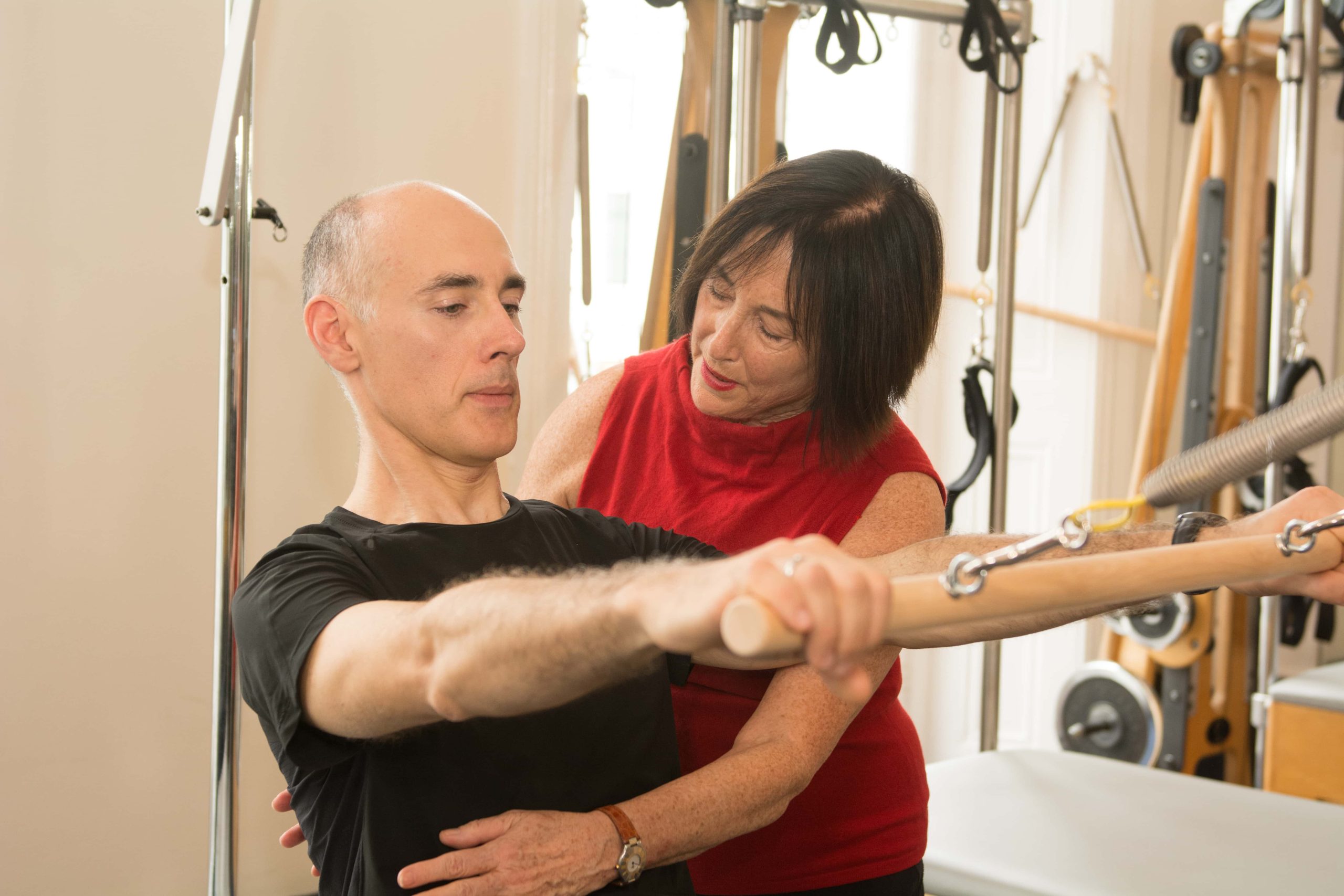
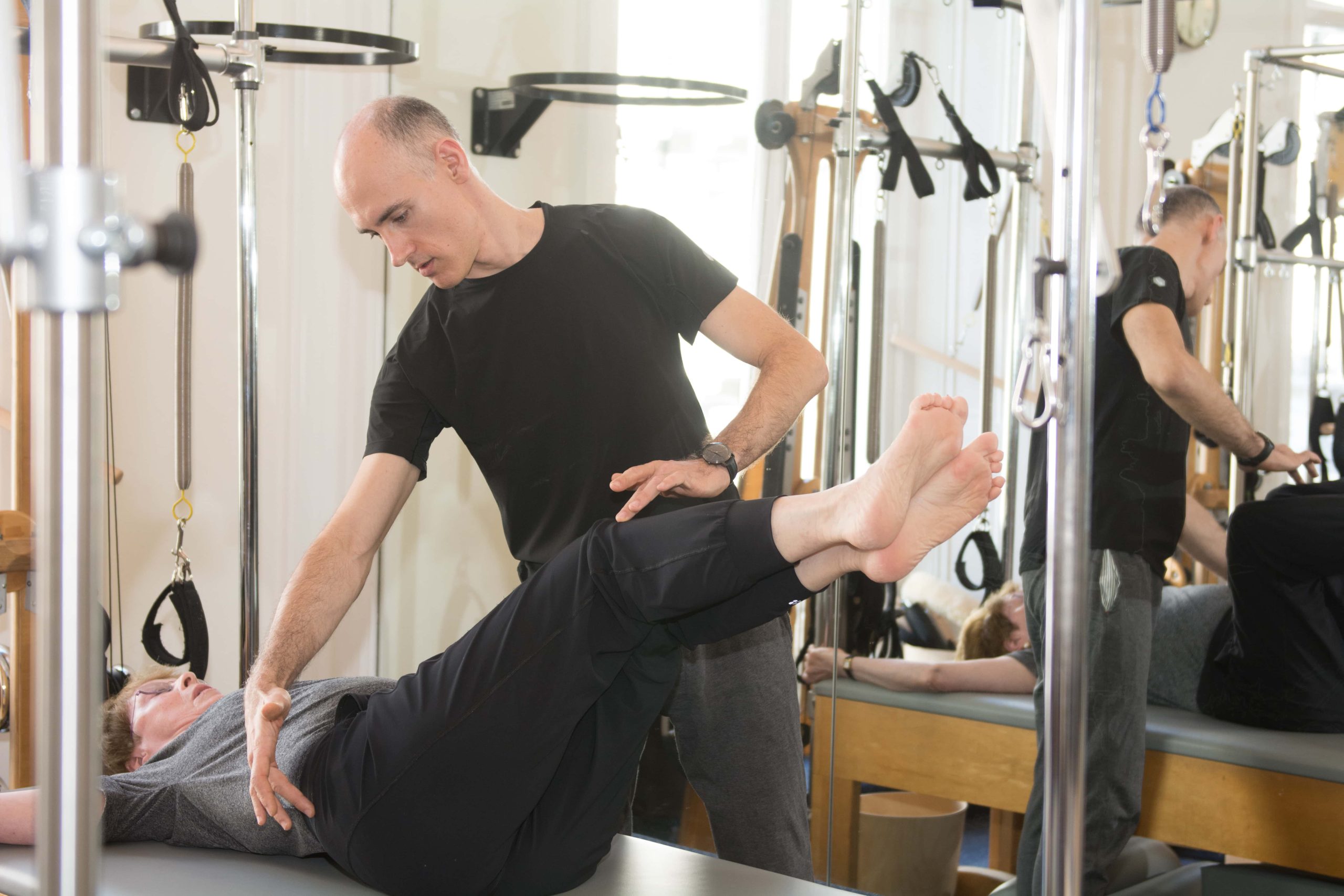
In a group class, it is not possible to monitor 10 people for the subtle signs that an exercise is being performed in a way that loads the wrong structures. In a one-to-one session, that monitoring is continuous. When I see a client load their lower back because their hip flexors aren’t engaging properly, I can adjust the movement before it reinforces a pattern we’re trying to change.
This level of attention is not a luxury for people in chronic pain — it is a prerequisite for the work being useful.
Every session at our South Kensington studio begins with a fresh assessment of where you are that day. Chronic pain fluctuates. A programme that was appropriate last week may need modifying today. We work with that reality rather than against it.
How Long Before Pilates Helps with Chronic Pain?
This varies considerably depending on the nature and duration of the pain, how long compensatory patterns have been established, and individual factors including age and general fitness. In clinical research, meaningful improvements have been observed in as little as six weeks of consistent work.
What I can say from experience is that most people with chronic pain notice a qualitative shift — a sense of something loosening, of moving with less effort — before the pain statistics change. They start standing differently. They sleep better. Small daily activities become less effortful. These changes often precede significant pain reduction and are, in themselves, meaningful progress.
See also: Pilates for Back Pain: What to Expect When You Start for a closer look at how chronic spinal pain is approached in our sessions.
Is Pilates Safe When You’re in Pain?
Pilates is not about pushing through pain, and it is never performed that way in our studio. The classical apparatus — the Cadillac, Reformer, Chair and Ladder Barrel — allows us to work in positions and through ranges that support the body rather than compress it. Spring resistance replaces body weight when needed. Positions are chosen to offload painful areas while still engaging the muscles that need to strengthen.
If you are in a period of acute flare, we may work very gently or focus primarily on breath and postural awareness. If things are more settled, we build progressively. The rate of progression is always led by what your body shows us, not by an external timeline.
If you’re living with chronic pain and wondering whether Pilates might offer a way forward, get in touch for a conversation about what one-to-one sessions could look like for you.
