

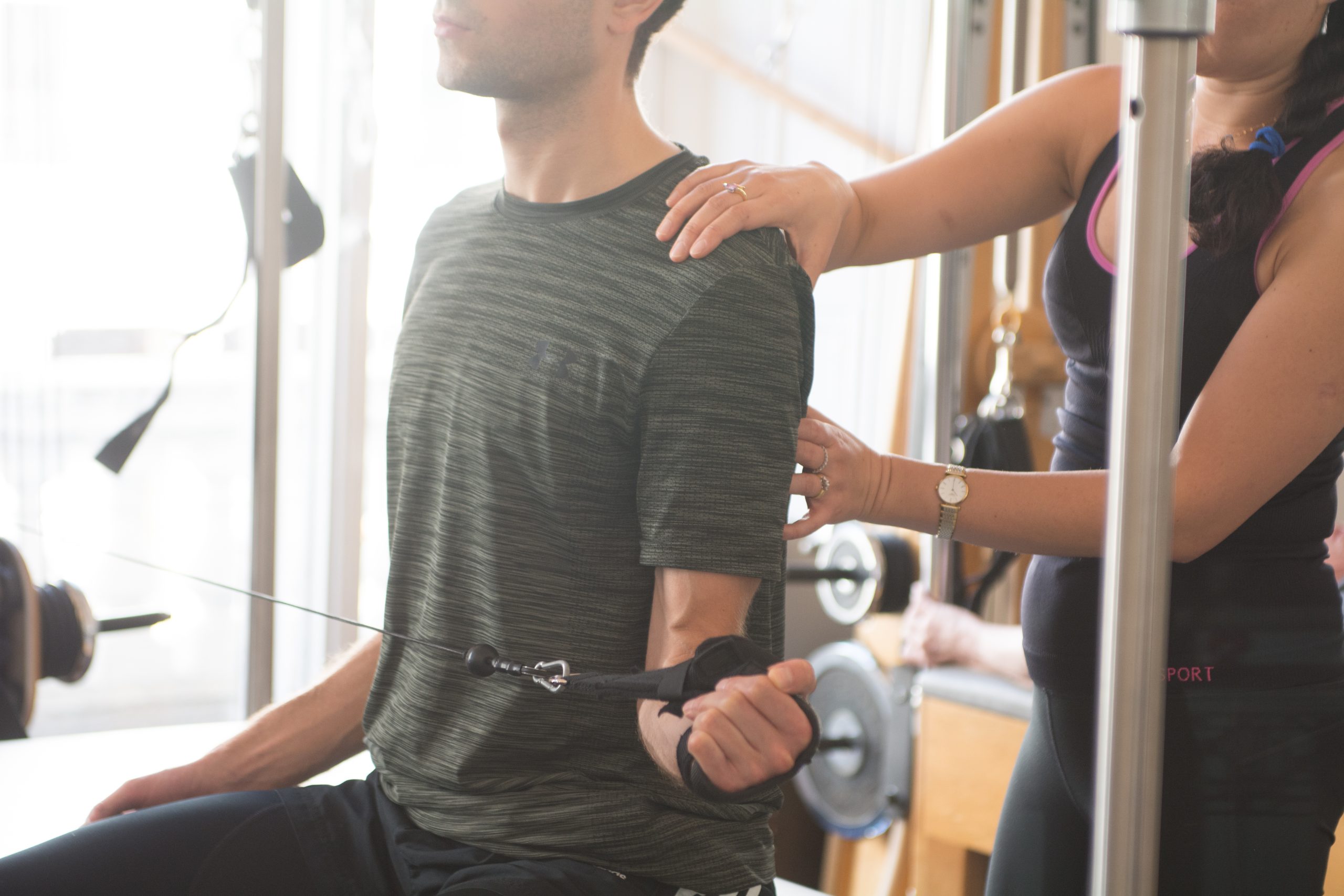
Osteoarthritis and osteopenia sit at opposite ends of a related concern: one involves the gradual deterioration of joint cartilage; the other, the slow reduction of bone density. Both are common in the clients we see, often appearing together, and both respond well to the kind of careful, load-appropriate movement that classical Pilates provides.
What brings most of these clients to us is a prior experience of being either told to rest and avoid exercise, or given a generic programme that made the joint pain worse. Neither outcome is inevitable. What it usually reflects is a mismatch between the exercise and the person.
Is Pilates Good for Osteoarthritis?
Yes. Pilates is a highly appropriate form of exercise for osteoarthritis. It is low-impact, meaning it does not subject joints to the compressive forces of running or high-impact aerobics. It systematically strengthens the muscles around affected joints — reducing the load those joints must bear — and improves the balance and proprioception that often deteriorate as joint pain changes how a person moves.
A 2025 meta-analysis of randomised controlled trials found that Pilates can relieve pain and improve physical function in people with knee osteoarthritis, with effects on both pain intensity and the WOMAC functional scale. The controlled, supported nature of apparatus-based Pilates is particularly well-suited to this population: spring resistance allows strengthening work without undue joint compression, and the wide range of positions available means there is almost always a way to work that does not aggravate the affected joint.
What Is the Difference Between Osteoarthritis and Osteopenia?
Osteoarthritis is a degenerative joint condition in which the cartilage that cushions the ends of bones gradually wears down. It most commonly affects the knees, hips, spine and hands, causing pain, stiffness and reduced range of motion. It is the most prevalent form of arthritis in the UK, predominantly affecting people over 50.
Osteopenia refers to lower-than-normal bone density — not yet at the level that meets the clinical threshold for osteoporosis, but indicating that bone density has begun to decline. Over 3 million people in the UK are affected by osteoporosis, with osteopenia representing a significantly larger population at earlier stages of bone density loss.
Both conditions share a need for exercise that builds muscular strength without placing inappropriate mechanical stress on weakened joints or bones.
How Does Osteoarthritis Differ from Osteoporosis in Terms of Exercise?
Osteoarthritis and osteoporosis require different exercise emphases, even when they occur in the same person (which they often do). Osteoarthritis management prioritises unloading affected joints while strengthening the surrounding musculature and maintaining range of motion. Osteoporosis management prioritises weight-bearing and resistance work to stimulate bone density — but within the constraint that high-impact loading or flexion loading of a fragile spine can increase fracture risk.
This is why assessment matters so much. When someone has both conditions, which is common in older adults, a one-size approach will either be insufficient for one condition or inappropriate for the other. We’ve written in more detail about is Pilates good for osteoporosis, including how we approach fracture risk and spinal loading specifically.
What Does Pilates for Osteoarthritis Actually Do?
Muscle strengthening around the joint. Weak muscles around an arthritic joint place more stress on the joint itself — meaning the cartilage must absorb forces that well-functioning muscles would normally share. Strengthening the quadriceps, hip stabilisers and gluteal muscles around a knee or hip with osteoarthritis directly reduces compressive load on the joint. This is especially relevant for clients coming to us for Pilates after knee replacement, where the surrounding musculature has to do more work to protect the new joint.
Improving joint mobility. Stiffness is a characteristic complaint of osteoarthritis, particularly in the morning or after sustained inactivity. Carefully graded mobilisation work reduces this stiffness and maintains the range of motion needed for daily function.
Balance and proprioceptive training. Osteoarthritis alters the proprioceptive feedback from the affected joint — the body’s ability to know where the joint is in space. This contributes to the increased fall risk seen in people with lower limb osteoarthritis. Pilates work systematically challenges and improves this proprioception.
Posture and load distribution. Osteoarthritis often develops or worsens in joints that are carrying uneven loads due to postural habits built up over years. Addressing these patterns — through the kind of attentive, whole-body assessment that our method is built around — works on the problem upstream rather than just managing the symptom.
What About Pilates for Osteopenia?
For clients with osteopenia, Pilates offers a form of resistance and weight-bearing work that can help maintain or modestly improve bone density, while also building the balance and postural strength that reduce fall risk. The spine extensors — the muscles of the back that keep the spine upright — are of particular importance: weakness here contributes to postural kyphosis (rounding of the upper back) that increases vertebral fracture risk in people with reduced bone density.
This overlaps significantly with our work with osteoporosis clients, discussed further in our piece on Pilates and osteoporosis. The principles are the same; the intensity and progression simply begin from a different starting point.
Is Apparatus Pilates Better Than Mat Pilates for Osteoarthritis?
For most people with osteoarthritis, apparatus-based work offers significant advantages over mat work. The apparatus provides support in positions that would otherwise compress the affected joints; it allows resistance to be dialled up or down precisely; and it creates movement in planes and through ranges that unassisted mat work often cannot achieve comfortably. This is not a rule — mat work has its place, particularly as strength and function improve — but for the early stages of working with osteoarthritis, the apparatus is generally more useful, a distinction we go into further in mat Pilates vs apparatus Pilates.
If you are managing osteoarthritis or osteopenia and would like to understand what a one-to-one programme at our South Kensington studio might look like, please get in touch.
