How Do Pilates Studios in London Differ in Terms of Equipment and Class Types?
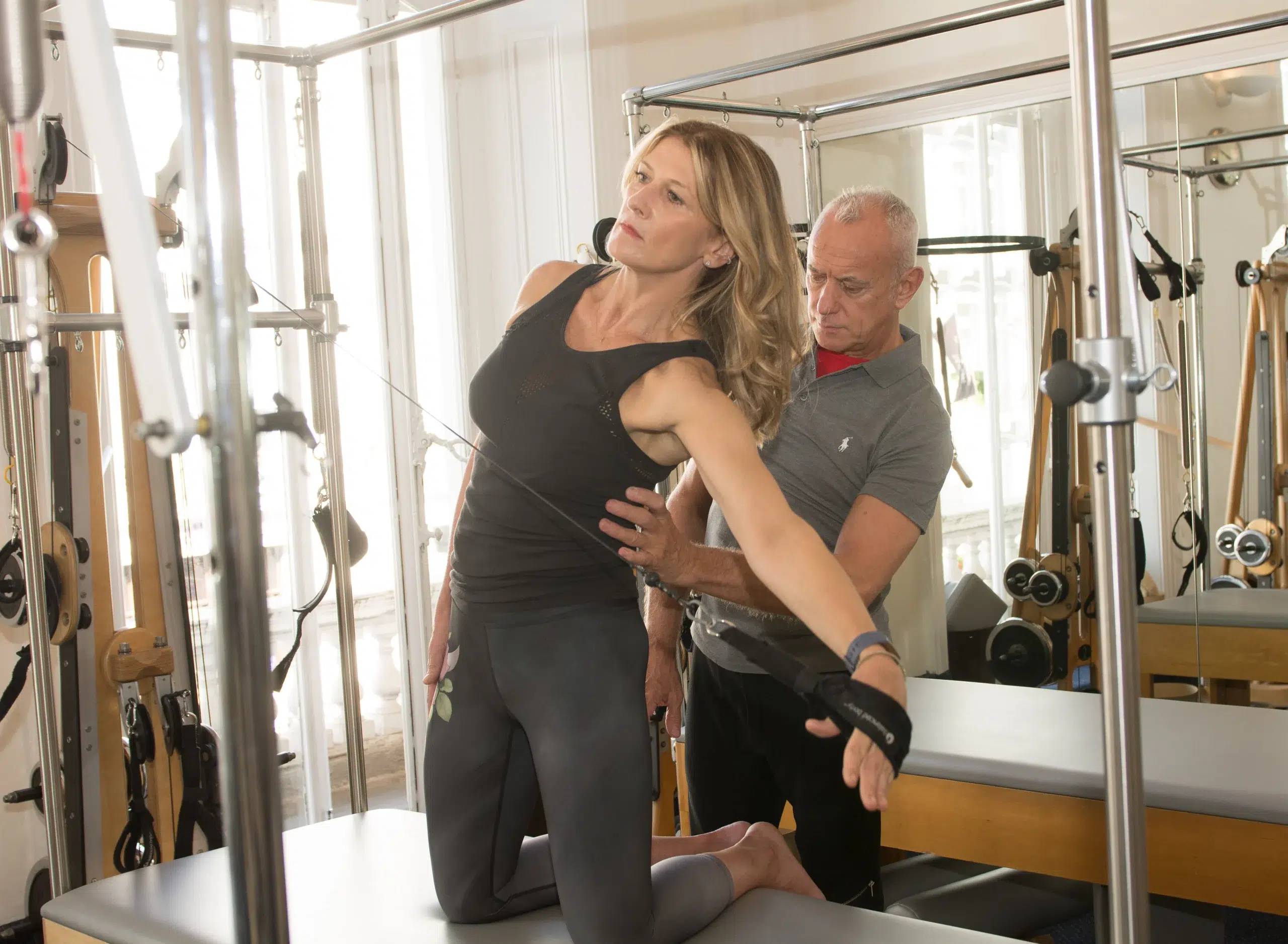


Not all pilates studios in London are the same. Walk down any street in Wimbledon, Kensington, or Chelsea and you’ll see reformer classes, mat classes, and “fitness Pilates” advertised in every window. But the equipment they use, the way they teach, and the results you get can be completely different.
The biggest differences come down to three things: the apparatus in the room, the class format, and the instructor’s training. This guide breaks each one down so you can choose a studio that matches your goals, experience, and budget.
Joseph Pilates designed a full system of apparatus. Most London studios only use one or two pieces. Knowing what each does helps you understand what you’re actually booking.
The most common machine you’ll see in London. A sliding carriage with springs, straps, and a footbar. It provides resistance and support at the same time, which makes it useful for beginners, rehab clients, and athletes. Best for building strength without joint compression and for identifying left-right imbalances instantly.
A table-like frame with bars, springs, and straps above it. Used for supported stretching, spinal articulation, and more complex rehab work. You’ll usually only find this in fully equipped studios or clinical Pilates settings. Best for clients with injuries, limited mobility, or post-surgical needs.
A box with a spring-loaded pedal. It looks simple but is the most challenging piece of apparatus because there’s no back support. Used to build deep core strength and balance. Best for intermediate to advanced clients or for teaching upright posture.
No equipment except a mat and sometimes small props. Relies entirely on your body weight and control. It’s the original method and the hardest to do well because there’s no spring feedback. Best for home practice or for learning fundamentals, but least forgiving for beginners with pain or weakness.
The same reformer can be used five different ways depending on the class format. This is where most confusion happens.
8 to 12 reformers in a room, one teacher. Fast-paced, set sequence, often with music. Lower cost per class. Good for general fitness and people who already know the technique. Less personal correction. Common in Chelsea, Shoreditch, and Wimbledon high street studios.
Just you and the teacher. Every exercise is selected for your body, goals, and limitations. Higher cost, but progress is faster because every minute is tailored. Standard for rehab, pre/post-natal, and clients with complex needs.
Two clients, one teacher. Each person works on their own programme. More affordable than 1:1 but still personalised. A middle ground if you want attention without full private fees.
Marketed as “HIIT Pilates” or “cardio reformer.” Uses the reformer but blends in lunges, planks, and weights. Focus is sweat and calories. Good if your goal is a workout. Less emphasis on classical technique or postural detail.
Taught by physiotherapists or rehab specialists, often 1:1 or in small groups of 3-4. Uses reformer, cadillac, and chair for injury recovery. Slower pace, medical focus. GP referrals common.
Key insight: Group reformer is cheaper but less personalised. Private sessions cost more upfront but usually mean faster, safer results because the teacher corrects you on every repetition.
This is the difference that affects everything else. Most people booking pilates classes London don’t realise there are two distinct schools.
Follows Joseph Pilates’ original order, system, and apparatus exactly. Exercises are layered over months and years. The goal is uniform development — no muscle group overworking to compensate for another. Sessions are quiet, precise, and technique-focused. Teachers train for years to understand the full system.
Adapts the method by blending in physiotherapy, yoga, or fitness influences. Teachers modify exercises, add weights, or change the order. More creative and variable. The focus shifts from system to individual workout design.
Many of the best pilates studios London offers lean “fitness-first” because it sells group classes. Studios focused on classical work are fewer and usually private. They prioritise precision and long-term structural change over calorie burn. Trevor Blount Pilates in South Kensington has taught the classical method since 1985 for exactly that reason.
Use this framework before you book:
This is where most comparison articles stop. They list studios and equipment like that’s the deciding factor. It isn’t.
A reformer in Chelsea is the same steel and springs as a reformer in Wimbledon. A cadillac is a cadillac. The difference is the person teaching you. Equipment doesn’t correct your form. It doesn’t know you have a slipped disc or that your left hip is tighter. Only the teacher does.
Results come from coaching, not machines. Personalised attention means you learn the “why” behind each movement, not just the “what.” That’s why two people can take 50 group classes and get different outcomes, while one person with 10 private sessions sees measurable change. The machine is standard. The instruction isn’t.
If your goal is long-term structural change rather than a quick fitness hit, look for studios that prioritise technique over trends. That usually means smaller class sizes or private work, teachers with decades of experience, and a full suite of apparatus so they can select the right tool for your body.
At Trevor Blount Pilates in South Kensington, sessions are 1:1 or 2:1 only, 75 minutes long, and taught using the classical system Joseph Pilates developed. The focus is precision, not pace. It’s particularly suited to beginners who want to learn correctly, clients managing pain or injury, and anyone who wants their body to move better in 10 years, not just 10 weeks.
You can find high-energy reformer across London. If you want to understand your body and rebuild it systematically, the options are fewer. That’s not a sales pitch. It’s just the reality of how the method was designed to work.
Not all pilates studios in London are equal. The equipment matters, but the class format and instructor expertise matter more. Choose based on your goal, not the trendiest branding. If you need rehab or lasting postural change, prioritise coaching quality and personalisation over price or proximity.
Start by defining what you want from Pilates. Then match that to the studio that teaches that way. For technique-focused training in Central London, explore private Pilates classes in London. For a breakdown of the apparatus used, see our reformer Pilates guide.
Private 1:1 or small semi-private sessions using the reformer. The springs give support and feedback while the teacher corrects you. Mat is hardest to learn correctly, and large group reformer moves too fast for most beginners.
Neither is better. They’re different tools. Reformer gives resistance and support, so it’s easier to feel connections and safer if you have pain. Mat requires more internal control. Ideally you learn both, but most people start on reformer.
For results, 2-3 times per week. For maintenance, once weekly with home mat practice. In rehab settings, physiotherapists often prescribe 2-3 private sessions weekly at first, then taper down.
If you have a specific goal, injury, or want to learn the method properly, yes. You’ll progress faster in 10 private sessions than 30 group classes because every rep is corrected. If you just want a social workout, group is more cost-effective.
