

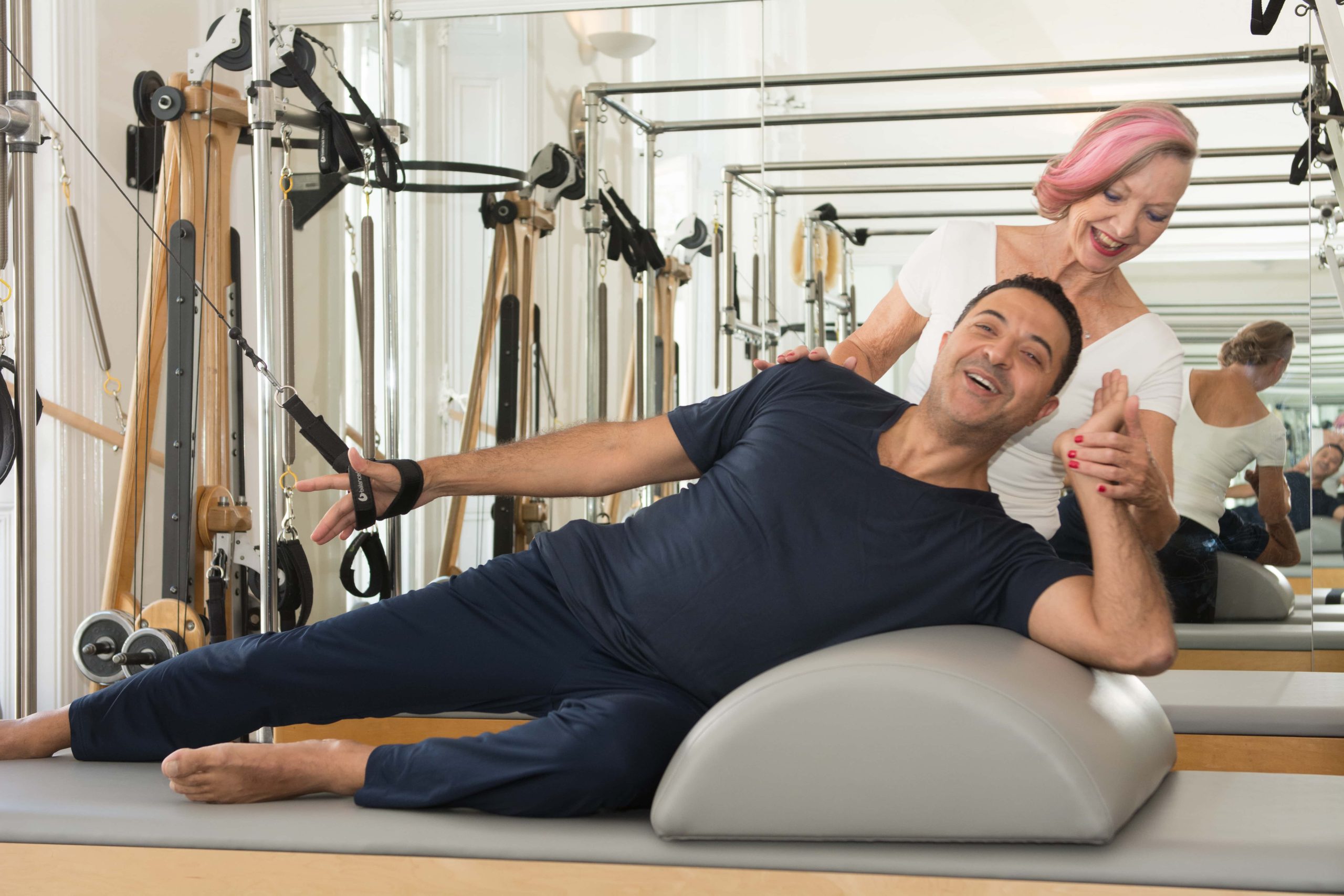
Most people expect Pilates to be about working harder. At our studio in South Kensington, we start somewhere else. We start with relaxation.
It surprises some new clients. This post explains why we teach this way, and what it means for how a session feels.
Why does relaxation come first in Pilates?
Relaxation comes first because it is very hard to move with precision while you are tense. When the body is holding itself tight, you cannot feel what a movement is actually doing. So we help you settle first, and only then ask for accuracy.
Think of an athlete at the starting blocks. They are not thinking about the race. They are finding a moment of quiet, so that the body can do what it has trained to do.
We want you to arrive in that same state. Relaxation is not a warm-up before the “real” work. It is the foundation the rest of the session is built on.
Isn’t Pilates supposed to be a workout?
It can feel like one, but we do not measure a session by how hard you pushed. Many people believe Pilates should be done quickly, and many of us live at a sped-up pace in the city. Our approach is the opposite. We slow down and concentrate.
That means slow, technical movement, with time to breathe and time to be accurate. We think of it as precision, not pressure. If you want to see how this differs from faster, modern reformer classes, our post on classical Pilates versus modern reformer classes goes into more detail.
What does relaxation look like during a session?
It looks quieter than most people expect. You are not rushing from one exercise to the next. You are working with your breathing, paying attention to how your body feels, and making small, careful movements.
Trevor is a swimmer, and he often thinks of good Pilates in similar terms. It is technical, and it is a very individual activity. It is just you and the piece of equipment you are working with.
Why is there no music in our studio?
We do not play music because your body has its own rhythm, and music can interfere with it. We would rather you listened to your body than to a playlist.
It is a small choice, but it matters to how we teach. Without a beat to follow, there is nothing to keep up with. You can focus on your breathing and on how each movement feels.
The room helps too. The studio is bright and light, with a stunning ceiling that you will see plenty of, since you spend a good part of the session on your back. There are very few distractions.
Is it strange to do Pilates in silence?
It can feel unusual at first, especially if you are used to gyms or group classes where music is part of the atmosphere. That is normal.
The quiet is deliberate. It gives you space to notice things you might miss otherwise, such as where you are holding tension or how your breathing changes during a movement.
How does an individual assessment fit in?
Relaxation does not look the same for everyone, so we start by getting to know your body. Every new client has an individual assessment before we begin. We look at your structure and your limitations, and we do not push through boundaries that should not be crossed.
This is why our approach is not one size fits all. It is built around you, and we meet you where you are. You can read more about how we work on our method page.
Is this approach right for you?
It may suit you if you prefer a slower, more thoughtful way to move. It may also suit you if fast, high-energy classes leave you feeling rushed or unsure of what your body is doing.
It may not be what you are looking for if you want a high-intensity workout with music and a quick pace. We would rather be honest about that than promise something we do not offer.
Our studio has been in South Kensington since 1991, and Trevor has taught Pilates for more than 40 years. In that time, our focus has stayed the same. Relaxation first, then precision, then lasting progress.
What should you expect at your first session?
You can expect a calm room, a conversation about your body and your goals, and an assessment before any movement begins. Our guide to what to expect at your first session walks through it step by step. If you would like to see how sessions are priced, our sessions and pricing page has the details.
If you would like to try it for yourself, you can get in touch to book a session.
