

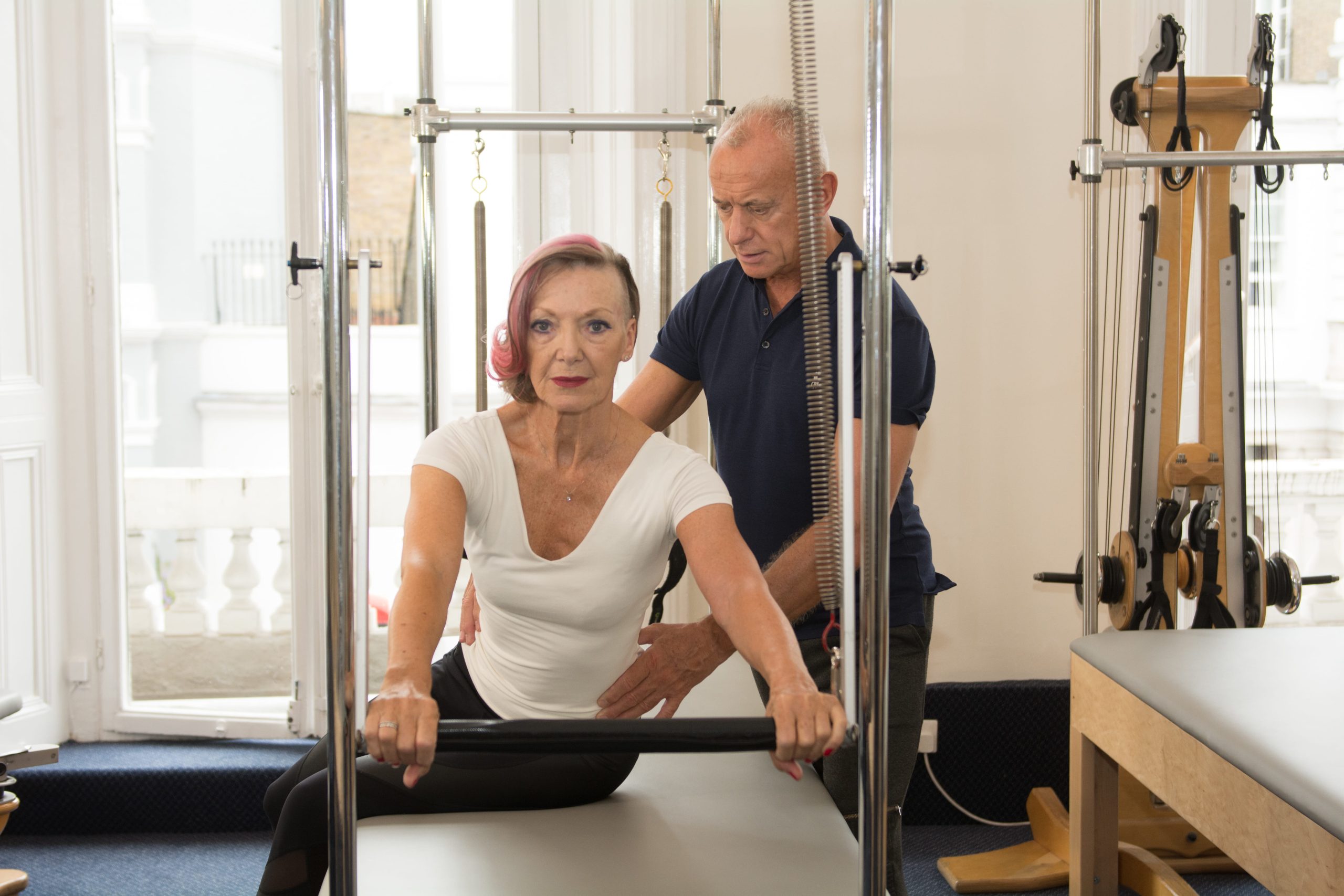
Back pain is one of the most common reasons people find their way to our studio. And it is also one of the areas where we see the most significant, lasting change.
But starting Pilates with back pain raises real questions. Will it make things worse? What actually happens in a session? How long before you feel different?
This is what you need to know before you begin.
Pilates can help with back pain — but only when it is taught correctly
The core principle behind the Trevor Blount method is that every body is different, even when the symptoms look the same. Two people can walk in with lower back pain and have completely different causes behind it — one a structural imbalance, one a history of disc compression, one a pattern of overusing the wrong muscles for years.
That is why a generic class is rarely the right starting point. What helps one person can aggravate another.
Does Pilates help with lower back pain?
Yes — when it is assessed, structured, and progressed correctly. Pilates trains the deep stabilising muscles that support the spine, reduces compression on the joints, and improves the symmetry of how you move. Over time, this takes pressure off the structures that are causing pain.
The key word is “over time.” Pilates is not a quick fix. But for people with chronic or recurring back pain, it tends to produce changes that hold — because it addresses how the body moves, not just how it feels on a given day.
What to expect in your first session
The first session at Trevor Blount Pilates is always an individual assessment. We do not put a new client straight onto the apparatus and begin a programme. We look first.
We are looking at your posture, your range of movement, where you are holding tension, and what your body is doing to compensate for the pain. Forty years of working with people in pain means Trevor and his teachers have seen most patterns before. Often we can identify the mechanical cause quite quickly.
From there, your programme is built specifically for you. The exercises, the resistance, the pace — all of it is matched to what your body needs at that point.
Is Pilates safe if I have a slipped disc or sciatica?
In most cases, yes — but only with proper assessment and guidance. The classical apparatus is particularly well suited to disc-related conditions because the supported, horizontal positions reduce spinal loading while still allowing you to build the deep muscle control that protects the spine.
We work closely with physiotherapists and orthopaedic consultants, and many of our clients come to us on medical referral. If you are managing a specific diagnosis, we will always work within the parameters your medical team has set.
Why group classes are often the wrong starting point for back pain
If you are in pain, a group reformer class — however well intentioned — puts you in a room where the teacher cannot adjust the session for your specific mechanics. The pace is set for the group. The cues are general. And if something is not right for your body, you may not know until after the session.
This is not a criticism of group Pilates for healthy, pain-free people. But clinical Pilates and fitness Pilates serve different purposes. When back pain is involved, the clinical approach — individual assessment, tailored programming, a teacher who is watching only you — is what produces reliable results.
How many sessions before I notice a difference?
Most clients notice something shifting within four to six sessions — better posture awareness, less tension through the lower back, movement that feels less effortful. Significant structural change takes longer, typically three to six months of consistent work.
How often you come makes a meaningful difference. Once a week is a reasonable start. Twice a week, where possible, tends to accelerate progress considerably.
The clients we see
Over forty years, the back pain cases that have come through this studio cover almost every category: herniated discs, scoliosis, post-surgical recovery, chronic postural pain from desk work, sports injuries that were never quite resolved.
One client came to us unable to get out of bed during acute episodes. Trevor designed a programme to strengthen the muscles that had wasted without irritating the spine — and after consistent work, she had not had a severe episode in years. She no longer used the specialist back chair she had relied on for years.
These are not unusual outcomes. They are what happens when the work is appropriate and the progression is careful.
Starting Pilates for back pain in London
Our studio is in South Kensington, a short distance from Kensington, Knightsbridge, and Chelsea. If you are considering Pilates for back pain and want to understand whether it is the right approach for your situation, the best starting point is a conversation.
View session options and pricing or call us on +44 20 7584 0680.
