

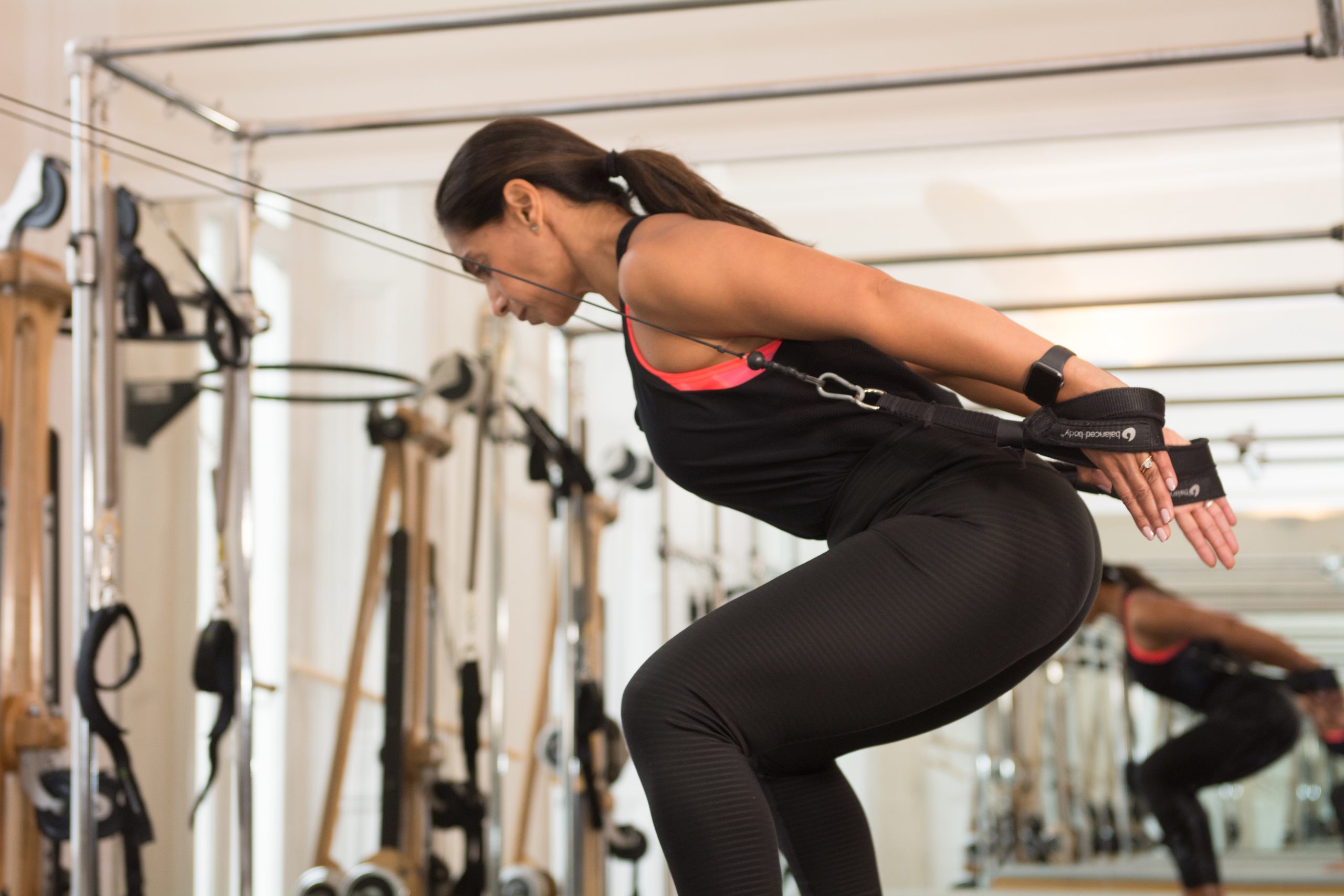
It is one of the most consistent questions asked before starting Pilates, and equally often by people who have been doing it for months without feeling much change.
How often do I need to come to actually see results?
The standard answer — two to three times a week — is not wrong. But it is incomplete in a way that matters, because it skips the variable that determines whether those sessions are actually working. That variable is what happens inside each one.
This article gives you the direct frequency guidance you came for. It also explains why the number of sessions is only part of the answer — and why, for many people, the reason their Pilates is not producing results has nothing to do with how often they are going.
The Short Answer — And Why It Is Incomplete
For most people, two to three Pilates sessions per week is a sensible and productive frequency. At this volume, the body has enough stimulus to build strength, improve movement patterns and develop postural awareness progressively, with adequate time for recovery and integration between sessions.
That is the answer. Here is what it does not tell you.
Two sessions per week in a one-to-one, assessed setting will typically produce faster and more lasting structural change than four sessions per week in a group class. The reason is specificity. In an individually assessed session, every exercise is chosen for your body — your movement patterns, your asymmetries, your history. In a group class, the programme is designed for a generalised participant. Frequency increases the dose. It does not change what the dose contains.
This is not an argument against group classes for people whose goals are general fitness. It is an argument that frequency recommendations cannot be separated from an honest account of what is actually happening in each session.
Why Session Quality Changes the Frequency Calculation
Does it matter what type of Pilates I do, or just how often?
Both matter — but they are not equal variables. Session quality sets the ceiling on what frequency can achieve.
Joseph Pilates’ most often-quoted observation is that in ten sessions you will feel the difference, in twenty you will see the difference, and in thirty you will have a whole new body. This is cited in almost every Pilates frequency guide, usually without context. What is almost never mentioned is that Pilates made this observation about private, individually assessed instruction. He was describing a one-to-one teaching relationship where every session was designed for the specific person in front of him.
Applied to a group reformer class format, the timeline does not hold in the same way — because the conditions that produced it do not exist.
What we observe consistently at the studio is this: clients who come to us having done group Pilates for a year or more, sometimes twice or three times a week, and who feel that something is not quite working, almost always share the same problem. The sessions were not targeted at their body. They were doing Pilates. They were not doing their Pilates.
The frequency was there. The specificity was not.
How Often Should Beginners Do Pilates?
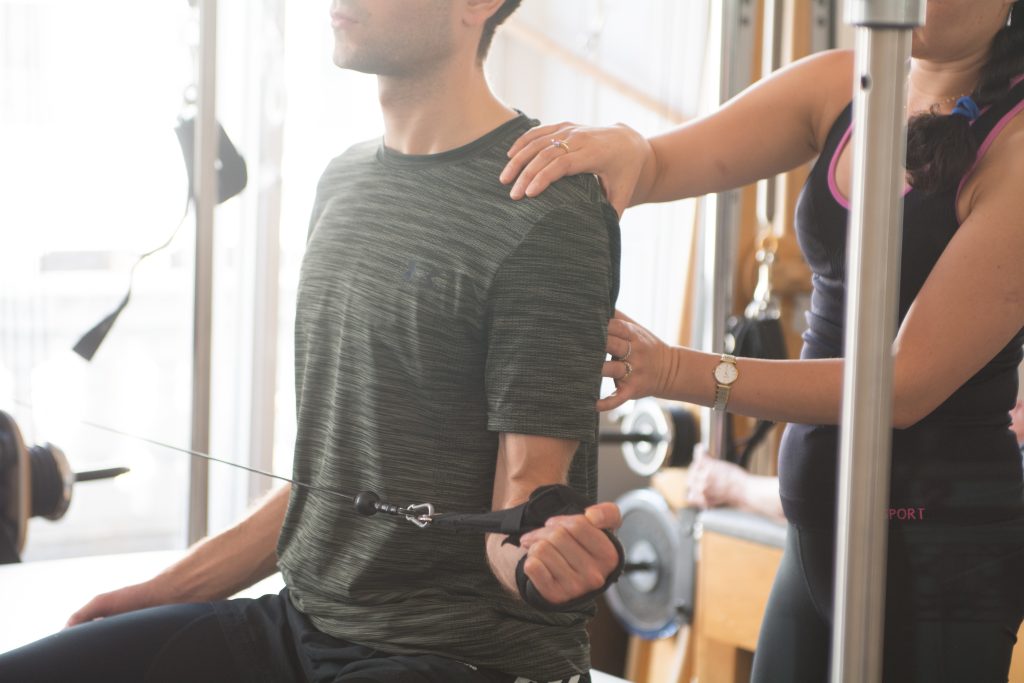
For someone beginning Pilates in a one-to-one setting, once or twice per week is not just sufficient — it is often preferable to more.
The reason is neurological. Learning Pilates is not primarily a muscular process. It is a process of teaching the nervous system new movement patterns: how to find deep stabilisers that may have been dormant for years, how to breathe in a way that supports the spine, how to carry the pelvis and ribcage in relationship to one another. These patterns need time to consolidate between sessions. They are not reinforced by repetition before they have been established — they are confused by it.
Clients who begin with two sessions per week in the early stages sometimes progress more slowly than those who begin with one, because the second session arrives before the nervous system has integrated what happened in the first. The body is still processing. Adding more input before that process completes does not speed things up.
One well-structured, individually assessed session per week in the first month typically produces a cleaner foundation than two sessions per week of generic instruction. Build the frequency once the patterns are consolidating — not before.
Is once a week enough for Pilates to work?
Yes — particularly in a one-to-one setting where session quality is high. Progress will be slower than twice a week, and maintaining momentum across a seven-day gap requires some independent attention to what was worked on in the session. But once a week produces meaningful, cumulative benefit. For clients managing busy schedules or using Pilates alongside other movement practices, one high-quality session per week is not a compromise. It is a sensible starting point that can be built on.
How Often for Rehabilitation or Structural Goals?
For clients working through post-surgical recovery, hypermobility, chronic pain, or significant postural dysfunction, frequency should be determined by the instructor following assessment — not by a general guide.
The typical starting point is one to two sessions per week, with careful attention to how the body is responding between appointments. In rehabilitation work, the integration window between sessions is not empty time. It is where the body consolidates structural changes, where muscles begin to hold new positions without active effort, and where the nervous system starts to treat the corrected movement pattern as its default rather than its exception.
More sessions per week in the early stages of rehabilitation does not compress this process. It can interrupt it. We regularly see clients who have been doing Pilates twice daily from a video programme — or attending studio classes five times a week — and whose bodies are so loaded with input that they cannot consolidate anything. The system is constantly being asked to perform rather than being given space to adapt.
The right frequency in rehabilitation is the highest frequency at which integration is still occurring. Identifying that threshold is one of the things that experienced one-to-one instruction does that no general guide can.
How Often for General Fitness and Maintenance?
For clients who are structurally sound and using Pilates as a complement to an active life — or as their primary movement practice — two to three sessions per week is the well-supported recommendation, and it holds.
At twice a week, strength and proprioceptive awareness develop progressively. Postural improvements become habitual rather than effortful. The body begins to find the alignment cues from sessions in daily movement rather than only during the session itself.
Three times a week accelerates this, particularly in the earlier stages of a more advanced programme. The additional session provides more stimulus for neuromuscular adaptation — the process by which the nervous system learns to recruit the right muscles efficiently — without pushing into the diminishing returns that come from daily high-volume training.
Beyond three to four sessions per week, the benefit curve typically flattens for most clients doing precision-based apparatus work. Unlike cardiovascular training, where volume accumulation has a more linear relationship with outcome, Pilates progress is gated by the nervous system’s ability to integrate new movement patterns. Past a certain frequency, you are repeating patterns the body is already consolidating, rather than deepening them.
How long does it take to see results from Pilates?
In a one-to-one, assessed setting, most clients notice something within the first four to six sessions — usually a change in how a particular part of the body feels during or after movement rather than anything visible. Structural changes that are apparent to others — in posture, in how someone carries themselves — typically emerge between sessions ten and twenty, which at twice a week is roughly five to ten weeks.
This maps reasonably to Joseph Pilates’ original observation — but only when the conditions he was describing are present. In group classes, where sessions are not tailored to the individual, the timeline is less predictable, because the exercises being performed may or may not be addressing the movement patterns that are actually limiting progress.
The honest answer is that results are a function of session quality multiplied by frequency. Optimising one without the other produces half the outcome.
What Happens Between Sessions: The Integration Window
This is the part of the frequency conversation that almost no one talks about, and it is where a significant portion of the progress from a Pilates programme actually occurs.
Between sessions, the nervous system consolidates what was practised in the studio. Movement patterns that required conscious effort begin to become automatic. Muscles that were recruited with difficulty start to activate more readily. Postural positions that felt forced begin to feel natural. None of this happens in the session itself — the session is the input. Integration is the output, and it happens in the hours and days that follow.
Can you do Pilates every day?
For gentle, low-load practice — breathing work, basic mobility, the kind of movement that supports recovery rather than challenges it — daily Pilates is reasonable and for some clients beneficial. For intensive apparatus work, particularly in the early and middle stages of a programme, daily practice does not allow the integration window to function properly. Sessions that are too closely spaced begin to feel repetitive and produce fatigue without corresponding progress.
The nervous system is not a muscle. It does not adapt by volume alone. It adapts by processing, which requires time and rest as inputs alongside the movement itself.
A useful practical test: if you cannot remember the key corrections from your previous session, the sessions are probably too close together. The integration has not had time to complete.
Signs Your Pilates Frequency May Need Adjusting
These are patterns we observe across many years of teaching — not medical assessments, but practical signals worth paying attention to.
You may be doing Pilates too often if:
- Sessions feel like going through the motions rather than genuinely working
- You experience persistent low-level fatigue that does not resolve between sessions
- You keep encountering the same corrections without them landing
- Minor recurring strains appear in the same areas
- Progress has plateaued despite consistent attendance
You may not be going often enough if:
- Each session feels like starting from scratch — the corrections from the previous session have not carried over
- Movement patterns reset between sessions to the pre-Pilates default
- You can feel improvement during sessions but it does not transfer into daily life
- Progress is slow despite sessions feeling productive
Both patterns are fixable — usually through a combination of frequency adjustment and, more importantly, a conversation with the instructor about what the programme is actually targeting.
A Realistic Weekly Pilates Schedule
These are not prescriptions — they are frameworks. Individual assessment should always determine the actual programme. But as starting-point structures, these reflect what tends to work across different client profiles.
Rehabilitation or early structural work: One to two one-to-one sessions per week. Full integration window between sessions. Supported by gentle independent movement — walking, breathing practice — but not additional intensive Pilates work.
Building foundation — new to one-to-one Pilates: Once a week for the first four to six weeks, then building to twice weekly once movement patterns are consolidating. Resist the urge to accelerate frequency before the foundations are genuinely in place.
General fitness and active maintenance: Two to three sessions per week. At this stage, the body is integrating effectively and can absorb more stimulus without disrupting the adaptation process.
Advanced programme or performance-oriented work: Three to four sessions per week, across varied apparatus and focus areas. At this frequency, session variety matters — repeating the same programme at high volume produces diminishing returns. The instructor should be varying the stimulus as frequency increases.
The Trevor Blount Approach to Session Frequency
We do not give the same frequency recommendation to every new client, because no two clients arrive with the same body, history, or starting point.
What we do consistently is begin with an individual assessment that maps the person’s movement patterns, structural needs and goals — and build the frequency recommendation from that picture, not from a general guide. For some clients, once a week is exactly right to start. For others, twice a week from the beginning makes sense. The decision follows the assessment.
What tends to be true across almost every client is that the quality and specificity of the session matters more than the number of them — at least until a solid foundation is in place. Building that foundation well is what allows frequency to work as it should.
More detail about our method and approach is on the studio’s method page. If you are trying to work out the right starting frequency for your particular situation — whether you are new to Pilates, returning after time away, or working through a specific structural issue — the most useful step is a conversation with the studio rather than a general guide.
The right answer for your body is not in this article. It is in the assessment.
Trevor Blount Pilates is based in South Kensington, London. We offer individual assessments, two-to-one and one-to-one sessions using the full classical Pilates apparatus. To learn about our method or to speak with the studio, contact us here.
