

New mothers often ask me the same question, in slightly different ways: when can I start again, and where do I even begin?
There isn’t a single answer. Every birth is different, every recovery is different, and the body that comes through childbirth is not the same one that walked in. That’s the starting point for how we work with postnatal clients — not a fixed programme, but an individual assessment of what this particular body needs, right now.
Why postnatal Pilates needs to be different from a normal class
During pregnancy, the abdominal wall stretches and the connective tissue that holds it together softens. For many women this results in some degree of diastasis recti — a separation of the abdominal muscles — which doesn’t resolve on its own just because the baby has arrived. The pelvic floor, too, has carried significant load for nine months and, in vaginal delivery, undergone real physical strain.
Going straight back into general exercise, or a fast-paced class built for a different body, risks working against this healing rather than with it. That’s why we assess first, in the same way we assess every client’s individual structure and limitations before beginning. We look at how the core is functioning, whether there’s separation, how the pelvic floor is responding, and build from there — slowly, technically, without rushing toward “getting your body back,” which was never really the goal.
If you also experience joint laxity or hypermobility postnatally — common as pregnancy hormones affect connective tissue — this is worth mentioning at assessment, as it changes how we approach certain movements and pacing.
What a first postnatal session looks like
We start by listening to what the body is actually doing, not what a generic timeline says it should be doing by six weeks or twelve weeks. Breath comes first. Reconnecting the deep core muscles with the breath, before any loaded movement, is often the piece that’s been missed elsewhere.
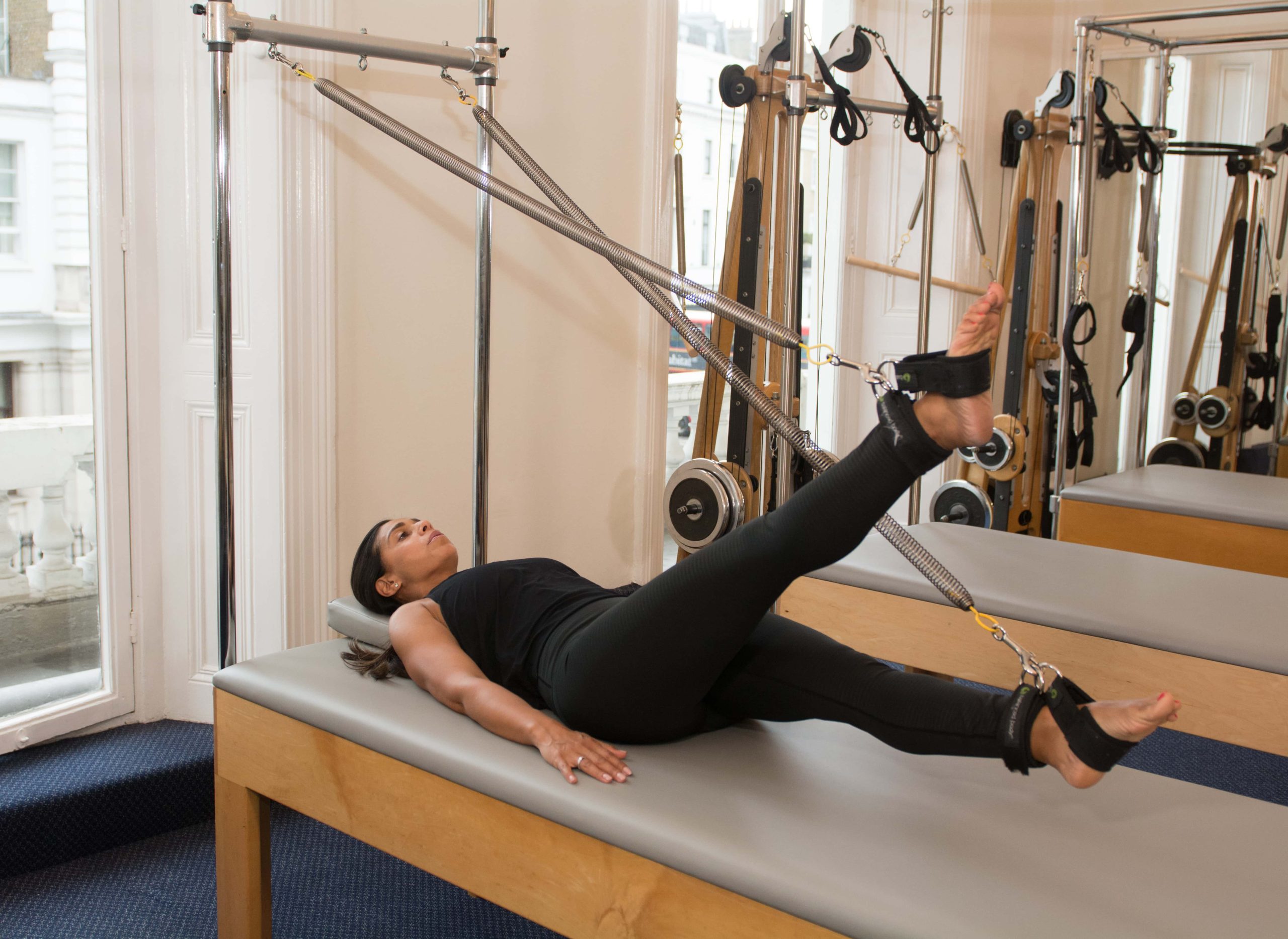
From there, movement is slow and precise, using the apparatus to support and guide rather than to challenge. There’s no music, no pace being set from outside — just you, your body, and the equipment, which is exactly how we work with every client, postnatal or not.
Is it safe to do Pilates with diastasis recti?
Yes, when the exercises are chosen with that specifically in mind. Certain movements — anything that causes the abdomen to dome or bulge — need to be avoided or modified until the gap has closed sufficiently. This is precisely why individual assessment matters more here than almost anywhere else.
How soon after birth can I start?
This depends entirely on the individual — the type of delivery, any complications, and clearance from a GP or obstetrician. We always ask clients to get that clearance first. Once cleared, we begin gently and build gradually, rather than working to a fixed week-by-week template.
Will this help with pelvic floor issues?
Pelvic floor function is woven through nearly everything we do in a postnatal session, from breathing patterns to how load is introduced through the legs and core. It’s not a separate add-on; it’s foundational to how the whole session is built.
Why the relationship matters here particularly
New mothers are often exhausted, adjusting, and short on time and patience for anything that doesn’t feel like it’s genuinely helping. This is where the one-to-one, decades-long relationship model at the centre of how we work makes the most difference. Sessions adapt week to week as recovery progresses and as life allows — there’s no fixed class to keep pace with.
Some of the clients I’ve worked with over the years came to me first in the postnatal period and are still coming, years later, because the relationship and the understanding of their body only deepened from there. Once you’re through the early recovery stage, how often you practise becomes the next natural question.
Ready to begin?
If you’re navigating the postnatal period and want a considered, individually assessed approach to rebuilding strength, get in touch to arrange a consultation.
