

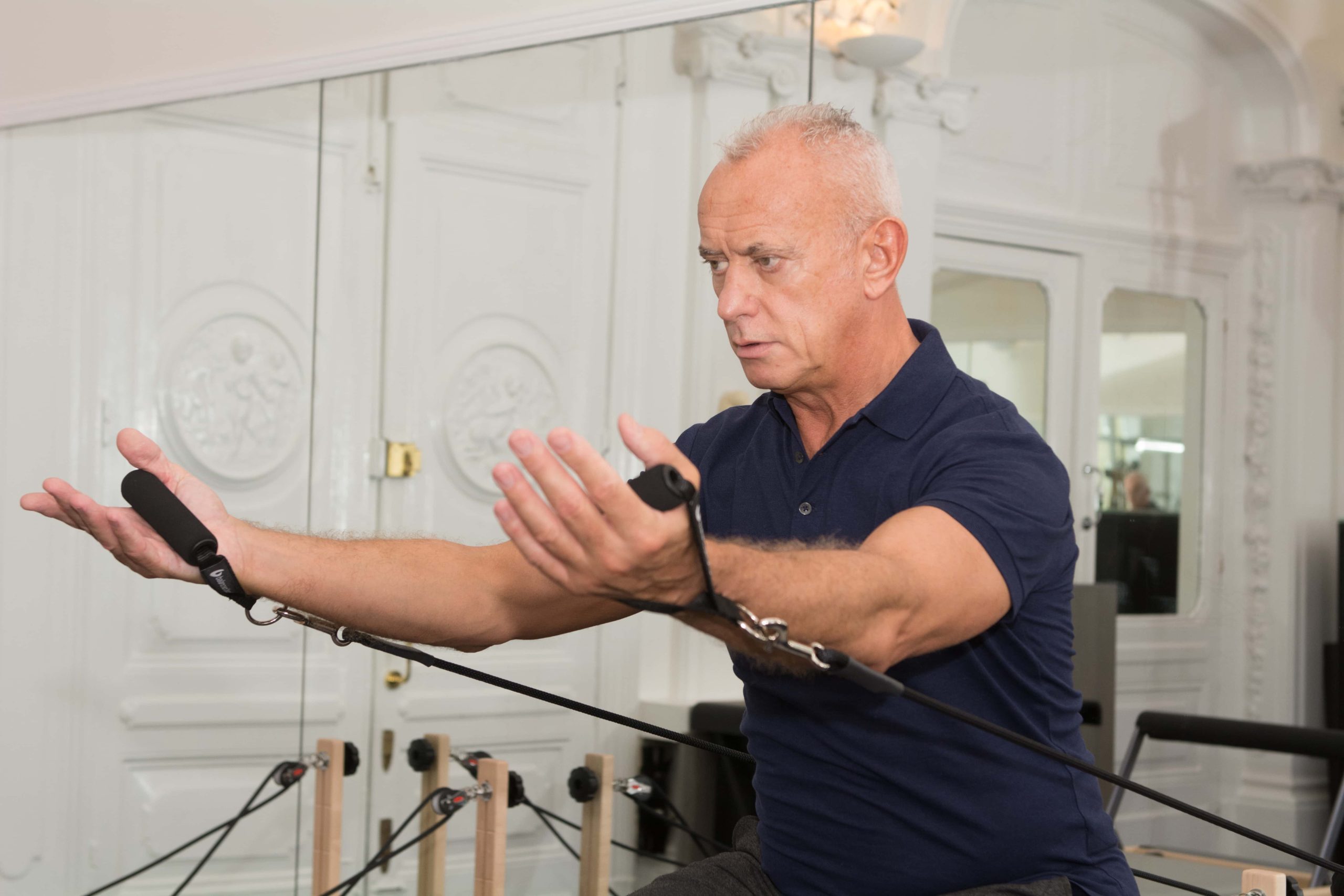
Walk into most reformer studios today and you’ll find the same formula: music playing, a room full of people, a fast-moving sequence designed to get your heart rate up and leave you sweating. It’s become the default image of what Pilates is.
That’s not what Joseph Pilates created, and it’s not how we work.
Where the confusion comes from
Pilates has been absorbed into the modern fitness industry, and in the process, much of it has been reshaped to fit that industry’s expectations — group classes, high energy, visible exertion, quick transformation. None of that is wrong for the people who want it. But it’s a significant departure from the method as it was originally developed, and from what actually makes Pilates effective for the body. If you’re weighing up your options locally, it’s worth understanding how Pilates studios in London differ in equipment and class types before choosing one.
What classical Pilates actually is
Joseph Pilates developed this method with precision and individual assessment at its centre — not speed, and not volume. He worked one-on-one, understanding each person’s anatomy and building movement around it. That’s the foundation we’ve maintained at the studio for over 40 years, since Trevor moved it to South Kensington in 1991, making it the longest-standing Pilates studio in Kensington & Chelsea. Trevor’s own role in shaping this standard for the profession goes back further still — he’s a founding member of the PILATESfoundation, the UK’s professional accrediting body for Pilates teachers.
The differences from a modern reformer class are practical, not just philosophical:
Individual assessment first. Every new client is assessed before any programme begins — their structure, their limitations, what their body needs. A group class works from an average; classical practice works from the individual in front of you.
No music. Music sets an external pace and becomes a distraction from what the body is actually doing. We work in silence deliberately, so attention stays where it should be — on the movement itself.
Slow, technical movement. Precision takes time, and the equipment itself is part of how that precision becomes possible — see mat Pilates vs apparatus Pilates for how spring resistance and apparatus adjustability change what’s achievable. Rushing through a sequence to raise a heart rate is a different goal entirely from moving with control and accuracy. Classical practice prioritises the latter.
One-to-one, not group. The apparatus and the guidance are tailored to one body at a time, adjusting session to session as that person’s needs change — not fixed to a class timetable that has to work for everyone in the room. This is what private reformer Pilates actually means in practice, and it’s a large part of what separates studios across London beyond just the equipment on the floor.
Why this matters for results
The modern reformer class model is built for people who want a workout. Classical Pilates is built for people who want to genuinely understand and improve how their body moves — which is a different, often more demanding, and typically longer-lasting outcome.
This is why so many of the clients we work with come to us for injury recovery, chronic conditions, or long-term postural issues that a fast-paced class either can’t address or would actively risk aggravating. If your priority leans toward rehabilitation specifically, it’s worth reading how clinical Pilates differs from fitness Pilates. It’s also why clients tend to stay for years, not weeks — the method builds a relationship with your own body that a 45-minute group session isn’t designed to create.
Frequently Asked Questions
Is classical Pilates less effective than a reformer workout class?
Not less effective — differently purposed. A reformer class is generally built for fitness and calorie burn. Classical Pilates is built for precision, rehabilitation, and long-term movement quality. Someone recovering from surgery, managing a chronic condition, or dealing with hypermobility will typically get more genuine benefit from the classical, individually assessed approach.
Can classical Pilates still be a good workout?
Yes — but the intensity comes from precision and control, not speed or repetition count. Many clients find it more physically demanding in a different way, because there’s nowhere to hide behind momentum.
Why has the studio kept the classical approach for 40 years?
Because it works, and because it’s what actually helps the clients who come to us — many of whom have already tried the faster, trend-driven version elsewhere and found it didn’t serve what their body actually needed.
Ready to experience the difference?
If you’d like to understand what a genuinely individually assessed approach to Pilates looks like, get in touch to arrange a consultation.
