

Please rotate your device.
S C R O L L

Pilates for Stroke Recovery: Rebuilding Balance and Control, One Movement at a Time

Recovery after a stroke rarely follows a straight line. Some things come back quickly. Others take much longer, and some days feel like they’ve gone backwards. What I’ve learned, working with clients at this stage of recovery, is that the body responds best to patience — to movement that’s slow enough to actually notice what’s happening, rather than rushed through.

This is where our approach to Pilates has something genuine to offer. It isn’t a treatment for stroke, and it doesn’t replace physiotherapy or clinical rehabilitation. But as a complement to that care, once a client has been cleared by their medical team, it can support the slow work of rebuilding balance, coordination, and confidence in movement.

Why slow, controlled movement matters after stroke

A stroke can affect balance, coordination, and control on one side of the body in ways that make even simple daily movements feel effortful and uncertain. Rebuilding that control isn’t about pushing hard. It’s about relearning movement with precision, using the body as a sensor to feel what’s happening and respond to it — which is close to the foundation of how we approach every client, stroke recovery or not.

The apparatus we use supports the body through movement rather than leaving it to manage the full effort alone, which matters enormously when balance or one-sided strength is still recovering.

What we need before we begin

We always ask for clearance from a GP, neurologist, or physiotherapist before starting sessions with a stroke recovery client. Every stroke is different, and the right starting point depends entirely on where someone is in their recovery, what their care team has already established, and what movement is currently safe for them.

Once cleared, we assess individually — never from a template — looking at what movement is available, where control needs rebuilding, and how session pace should be set for that particular person.

What a session looks like

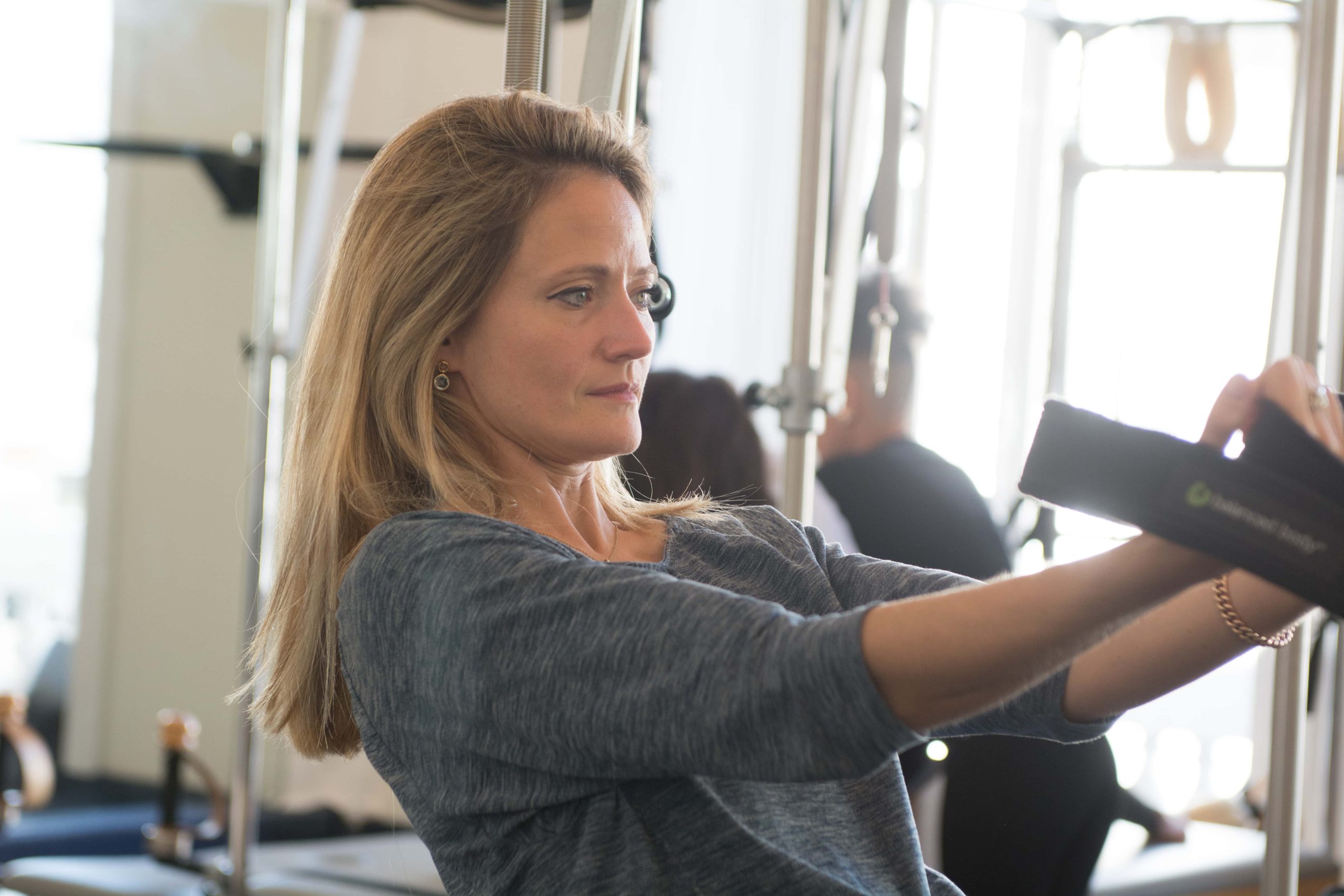
Sessions are slow, deliberate, and closely guided. There’s no music and no external pace to keep up with — attention stays on the client’s own movement and breath throughout. Work often starts with very controlled, supported movement and builds gradually as coordination and confidence return.

Because this is one-to-one, the session can change from week to week as recovery progresses — something a group class simply can’t offer.

This is a similar principle to how we work with clients managing Parkinson’s — another condition where control, coordination, and confidence in movement are central to the work, always alongside a client’s existing medical care.

Can Pilates help with balance after a stroke?

Balance and coordination are often central to what we work on with stroke recovery clients, always within the guidance already set by their medical team. The apparatus-based approach allows genuinely controlled, supported movement while that balance work happens.

Is this a substitute for physiotherapy?

No. This sits alongside physiotherapy and clinical rehabilitation, not in place of it — the same clinical, individually assessed approach we bring to any client managing a medical condition. We ask every stroke recovery client to be cleared by their medical team first, and we work in a way that complements — not replaces — that ongoing care.

How soon after a stroke can someone start?

This depends entirely on the individual’s recovery and their medical team’s guidance. There’s no fixed timeline we work to. We begin once a client has clearance, and build from wherever they are on that day.

Ready to begin?

If you or a family member are looking for a considered, individually assessed approach to movement during stroke recovery, get in touch to arrange a consultation.
Pilates for Older Adults: Building Strength and Confidence at Any Stage

A client in her seventies once told me she’d never managed to stick with any form of exercise for more than a few weeks in her life. She’s been coming to the studio for six years now. Her son comes too.

I think about that often, because it says something important about what actually works for people later in life. It isn’t intensity. It’s precision, consistency, and a method that meets the body where it is rather than where a class assumes it should be.

Why balance and strength matter more with age

Muscle strength declines gradually with age if it isn’t actively maintained, and that decline affects balance and mobility long before it becomes obvious day to day. Balance itself is something that can be trained — the body relearns how to stabilise through movement, not through avoiding it.

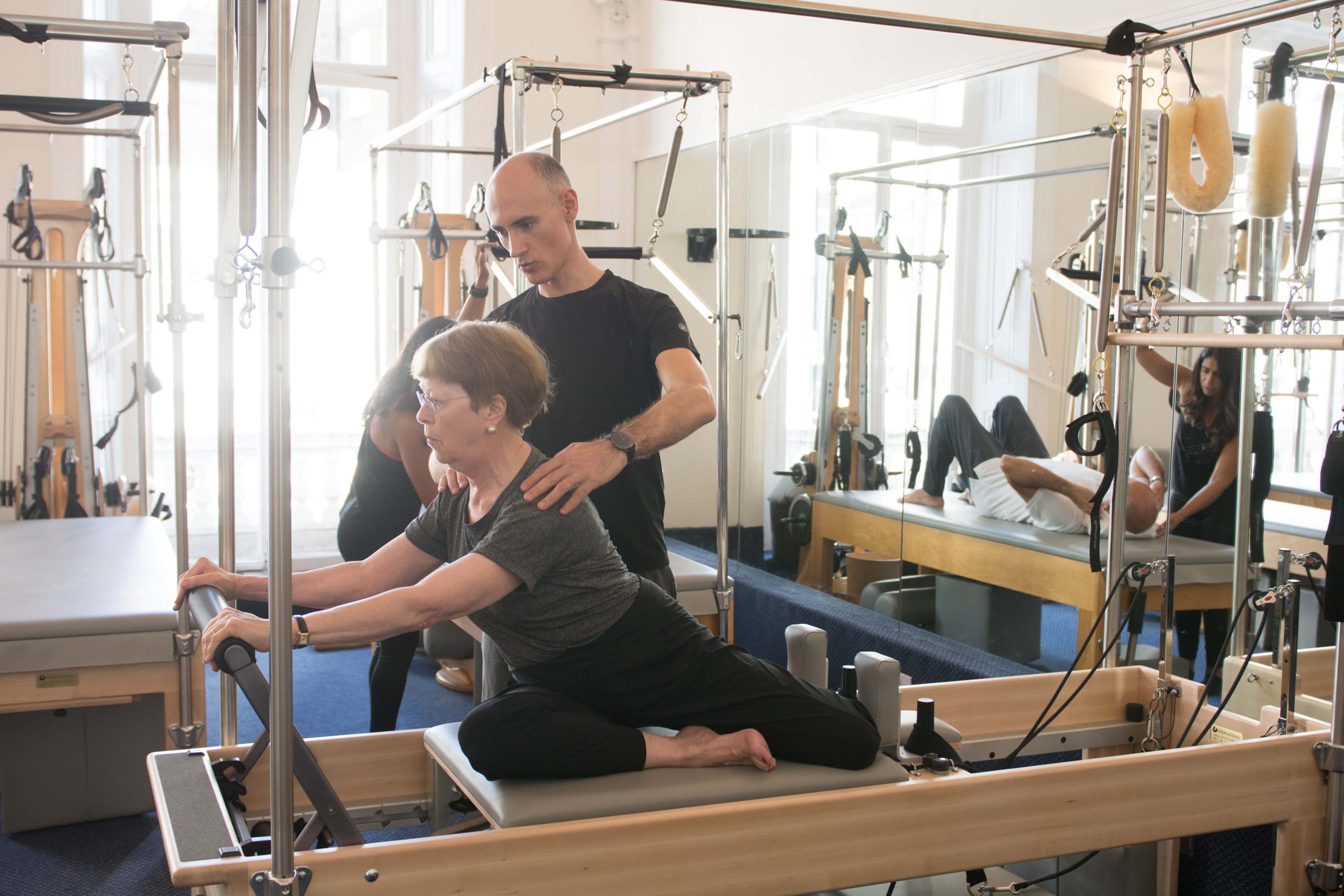
This is where Pilates has a genuine advantage over many other forms of exercise for older clients. It works on strength, control, and balance together, using apparatus that supports the body while it learns, rather than leaving someone unsupported and at risk of a fall during the exercise itself.

What makes a one-to-one approach right for this stage of life

Group classes are built around an average — an average fitness level, an average pace, an average set of limitations. Nobody in later life is actually average. One person’s knees might be the limiting factor; another’s might be a hip replacement, or reduced confidence after a fall, or simply years of a desk job catching up with their posture.

We start every new client with an individual assessment, and for older clients this matters even more than usual. We’re not working from a template. We’re working from what this particular body can do safely today, and building from there — the same principle behind how we work with clients recovering from hip or knee replacement, managing osteoporosis, or living with osteoarthritis — all common considerations at this stage of life.

What a session actually involves

Movement is slow, controlled, and always within a safe range. There’s no rushing to keep pace with music or a group — because there’s no music at all. Just the client, the apparatus, and the guidance of someone paying close attention to how their body is responding.

Sessions build strength in the muscles that support posture and balance — particularly the deep core and the muscles around the hips and spine — while also working on the kind of controlled, functional movement that carries over into daily life: getting up from a chair, carrying shopping, walking without hesitation.

Is Pilates safe if I have joint pain or a previous injury?

Yes, when it’s tailored to that specifically. This is exactly the kind of situation individual assessment exists for — identifying what needs to be worked around, modified, or built up to gradually, rather than following a generic programme that doesn’t know your history.

Do I need to already be fit to start?

No. Some of the clients who’ve stayed with us longest started with very little prior exercise experience at all. What matters is starting at the right level for you, not arriving already capable.

How is this different from a general seniors’ fitness class?

A general class is designed for a room full of people at once, at one pace. What we do is designed around one person, adjusted every session to how that person’s body is responding that day. That’s a different kind of exercise altogether.

Ready to begin?

If you’d like a considered, individually assessed approach to building strength and confidence, get in touch to arrange a consultation.
Pilates for Postnatal Recovery: A Slow, Considered Return to Movement

New mothers often ask me the same question, in slightly different ways: when can I start again, and where do I even begin?

There isn’t a single answer. Every birth is different, every recovery is different, and the body that comes through childbirth is not the same one that walked in. That’s the starting point for how we work with postnatal clients — not a fixed programme, but an individual assessment of what this particular body needs, right now.

Why postnatal Pilates needs to be different from a normal class

During pregnancy, the abdominal wall stretches and the connective tissue that holds it together softens. For many women this results in some degree of diastasis recti — a separation of the abdominal muscles — which doesn’t resolve on its own just because the baby has arrived. The pelvic floor, too, has carried significant load for nine months and, in vaginal delivery, undergone real physical strain.

Going straight back into general exercise, or a fast-paced class built for a different body, risks working against this healing rather than with it. That’s why we assess first, in the same way we assess every client’s individual structure and limitations before beginning. We look at how the core is functioning, whether there’s separation, how the pelvic floor is responding, and build from there — slowly, technically, without rushing toward “getting your body back,” which was never really the goal.

If you also experience joint laxity or hypermobility postnatally — common as pregnancy hormones affect connective tissue — this is worth mentioning at assessment, as it changes how we approach certain movements and pacing.

What a first postnatal session looks like

We start by listening to what the body is actually doing, not what a generic timeline says it should be doing by six weeks or twelve weeks. Breath comes first. Reconnecting the deep core muscles with the breath, before any loaded movement, is often the piece that’s been missed elsewhere.

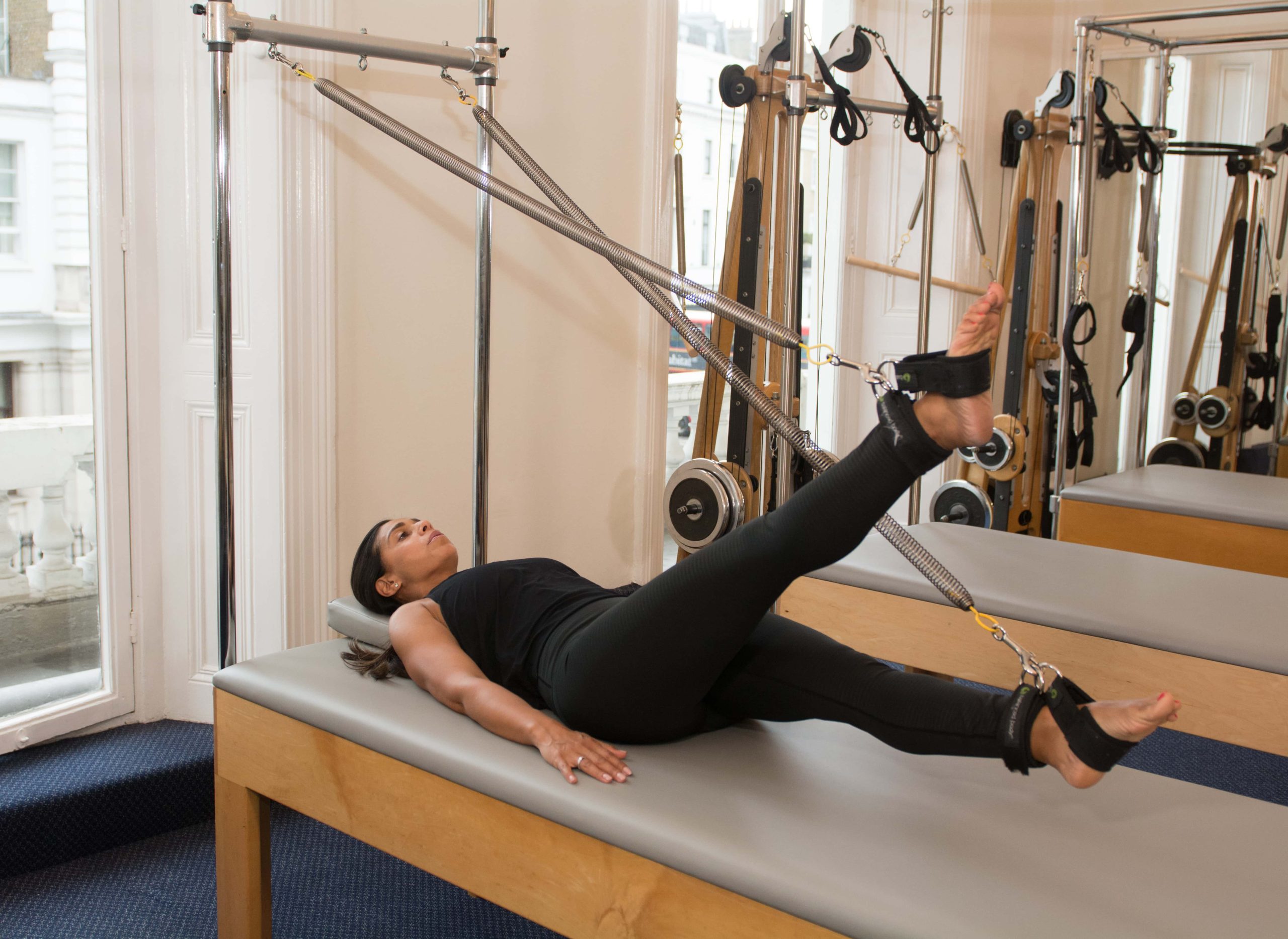
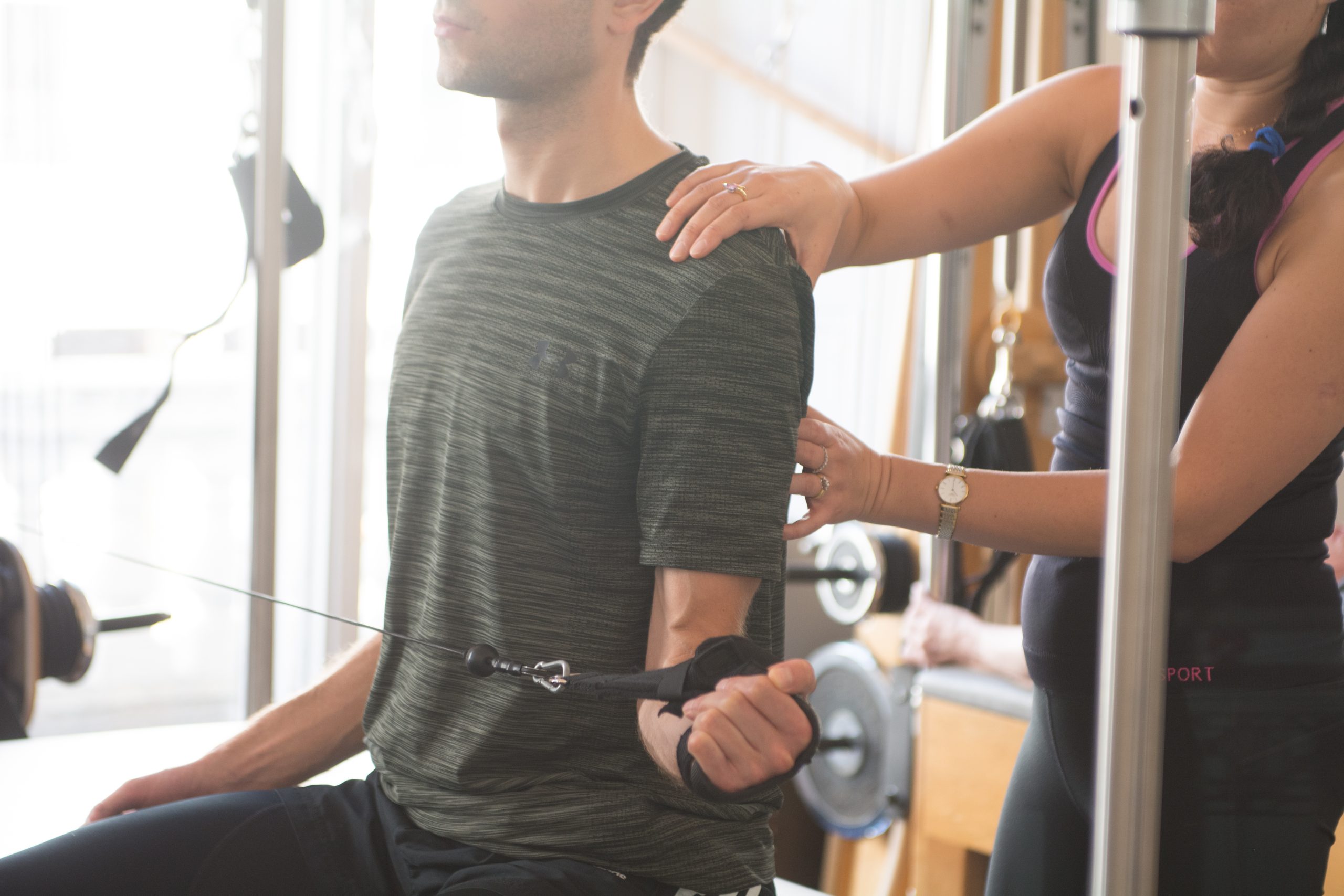
From there, movement is slow and precise, using the apparatus to support and guide rather than to challenge. There’s no music, no pace being set from outside — just you, your body, and the equipment, which is exactly how we work with every client, postnatal or not.

Is it safe to do Pilates with diastasis recti?

Yes, when the exercises are chosen with that specifically in mind. Certain movements — anything that causes the abdomen to dome or bulge — need to be avoided or modified until the gap has closed sufficiently. This is precisely why individual assessment matters more here than almost anywhere else.

How soon after birth can I start?

This depends entirely on the individual — the type of delivery, any complications, and clearance from a GP or obstetrician. We always ask clients to get that clearance first. Once cleared, we begin gently and build gradually, rather than working to a fixed week-by-week template.

Will this help with pelvic floor issues?

Pelvic floor function is woven through nearly everything we do in a postnatal session, from breathing patterns to how load is introduced through the legs and core. It’s not a separate add-on; it’s foundational to how the whole session is built.

Why the relationship matters here particularly

New mothers are often exhausted, adjusting, and short on time and patience for anything that doesn’t feel like it’s genuinely helping. This is where the one-to-one, decades-long relationship model at the centre of how we work makes the most difference. Sessions adapt week to week as recovery progresses and as life allows — there’s no fixed class to keep pace with.

Some of the clients I’ve worked with over the years came to me first in the postnatal period and are still coming, years later, because the relationship and the understanding of their body only deepened from there. Once you’re through the early recovery stage, how often you practise becomes the next natural question.

Ready to begin?

If you’re navigating the postnatal period and want a considered, individually assessed approach to rebuilding strength, get in touch to arrange a consultation.

Pilates for Scoliosis: What It Can and Can’t Do

Scoliosis is one of those conditions that people carry for years, often decades, without ever having received much in the way of practical guidance about how to live and move with it. The diagnosis may have come in adolescence, or it may have emerged gradually in adulthood as part of degenerative spinal change. Either way, the question that brings most people to us is the same: can Pilates actually help?

The honest answer is: meaningfully yes, with some important qualifications.

Can Pilates Help with Scoliosis?

Yes. Pilates cannot reverse or cure scoliosis — a structural lateral curvature of the spine — and it is important to be clear about that. What it can do, consistently and significantly, is strengthen the muscles that support the curved spine, improve body awareness and postural control, reduce pain and tension associated with the asymmetrical muscular loading that scoliosis creates, and improve breathing mechanics that the rib cage distortion of scoliosis can compromise.

For adults with scoliosis — particularly those whose curves are mild to moderate and who are not candidates for surgery — this represents meaningful improvement in daily quality of life. Clients who have worked with us over years report less pain, better posture and greater confidence in movement. That is a realistic and valuable outcome.

What Is Scoliosis?

Scoliosis is a three-dimensional spinal condition characterised by an abnormal lateral curvature and rotational component. When viewed from behind, the scoliotic spine appears to curve sideways — either in a single “C” curve or a double “S” curve. But the rotation of the vertebrae within the curve is equally significant: it changes the shape of the rib cage, affects the muscles on either side of the spine asymmetrically, and alters the way load is distributed through the spine in everything from sitting to walking.

The most common type — idiopathic scoliosis — has no clearly identified cause and accounts for roughly 80% of cases. It is typically diagnosed in childhood or adolescence. Degenerative scoliosis develops in adults as part of the ageing process, often presenting from midlife onward. Both types benefit from the same Pilates principles, though the starting point and progressions differ.

How Do You Know What Type of Scoliosis You Have?

A confirmed scoliosis diagnosis requires an X-ray measured by the Cobb method. The Cobb angle gives a numerical measure of the curve’s degree and, therefore, its severity. A curve of 10 degrees meets the clinical threshold; curves above 40 degrees are generally considered more significant. If you’ve been told you have scoliosis based on a visual assessment or surface examination, please confirm this with imaging before beginning any exercise programme specific to scoliosis.

Why Is One-to-One Pilates Important for Scoliosis?

No two scoliotic spines are identical. The curve pattern, the direction of rotation at the apex, the compensatory patterns that have developed, the presence or absence of pain — all of these vary between individuals. This means that exercises beneficial for one person’s scoliosis may be contraindicated for another’s.

In a group class, this level of individualisation is not possible. In a one-to-one session, I can assess where your spine is holding compression, where the concavities need opening, which muscles are working too hard on one side and not enough on the other — and build a session that addresses your spine specifically.

The classical Pilates apparatus is particularly useful here. The Cadillac, Reformer, and Ladder Barrel allow supported positions that reduce the compressive effects of gravity — which, for scoliosis, can perpetuate the collapse of the concave side of the curve. The apparatus also allows us to work in asymmetric ways when appropriate, addressing the specific pattern of your curve rather than treating the spine as symmetrical.

What Does Pilates for Scoliosis Focus On?

Axial elongation. The first priority is teaching the spine to decompress and lengthen along its own central axis. This means working against the gravitational compression that scoliosis exacerbates, opening the concave sides of the curve using breath and directed awareness.

Breath directed into restricted areas. The rib cage distortion that accompanies spinal rotation can significantly restrict breathing on the compressed side. Directed breath — using the breath deliberately to expand specific areas of the rib cage — is both a therapeutic tool and a diagnostic one. Where the breath goes tells us what is holding.

Deep stabiliser strength. The deep spinal muscles that run along the sides of the vertebrae behave asymmetrically in scoliosis — overshortened on one side, overlengthened on the other. Building balanced strength in these muscles, without simply reinforcing the existing asymmetry, requires careful exercise selection and consistent monitoring.

Postural awareness in daily function. Scoliosis management in Pilates is not only about what happens in the studio. It is about building enough awareness and muscular support that the posture you practise in sessions begins to carry over into how you stand, sit and move through the rest of your day.

Should You Avoid Any Exercises with Scoliosis?

This depends entirely on your curve pattern and severity. Some rotation exercises are appropriate and beneficial for certain scoliosis types; others would increase the rotational component of the curve and are best avoided. Spinal flexion work — roll-ups, C-curves — may be modified or excluded depending on the configuration of the curve. This is precisely the kind of decision that requires assessment, not assumption.

Is There Any Research Supporting Pilates for Scoliosis?

Research in this area is more limited than for some other conditions, but existing studies report improvements in Cobb angle, postural balance, pain and quality of life in adults with scoliosis following Pilates-based programmes. The most clinically consistent finding is not curve correction — which in structural adult scoliosis is unrealistic — but meaningful improvement in function, pain levels and muscular symmetry. This matches what we observe over time in clients who work consistently.

Scoliosis shares characteristics with hypermobility in terms of the need for precision in exercise selection and the risks of unmodified generic training. For further context on working with complex spinal presentations, see Pilates for Hypermobility.

If you have scoliosis and are considering whether Pilates could help, the most useful next step is a conversation. Contact us at the studio and we can discuss your specific situation and what one-to-one sessions might offer.

Find us on Intently